Who Is Most Affected by Türkiye’s Escalating Drought Crisis?
Executive Summary
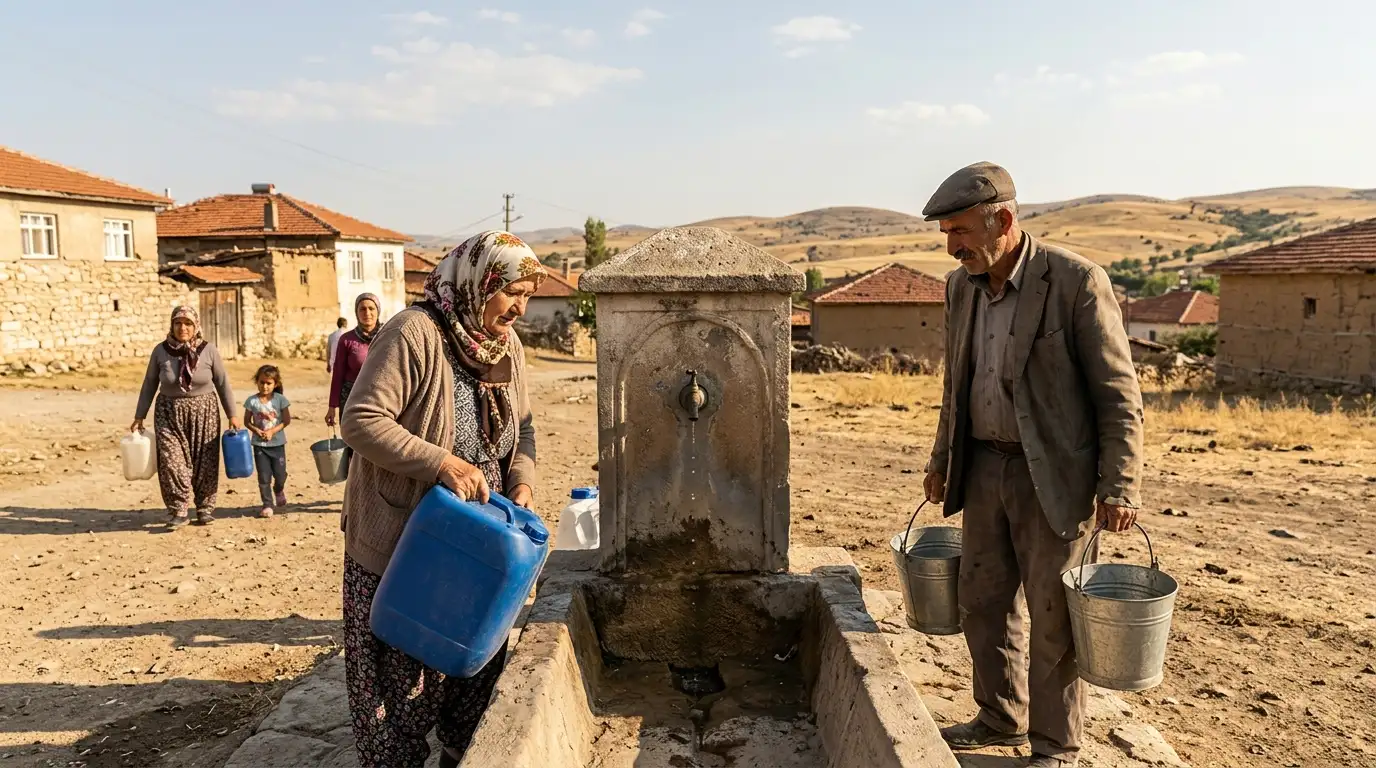
Türkiye is facing intensifying water stress. Reservoir levels in major metropolitan areas fluctuate at historic lows, agricultural regions report severe drought impacts, and climate variability is accelerating long-term scarcity risks.
Although water shortages are frequently presented as environmental or economic challenges, they are, at their core, a human rights issue.
Access to safe, sufficient water is recognized internationally as a fundamental human right. When water systems fail or become unevenly distributed, the burden does not fall equally.
Water scarcity reveals structural inequality.
The Scale of the Crisis
Climate patterns across Türkiye show:
- Reduced annual rainfall in several regions
- Increasing summer temperatures
- Longer drought cycles
- Rapid groundwater depletion
Urban growth, industrial expansion, and agricultural irrigation demand have compounded these pressures.
Water scarcity is no longer a future scenario. It is a present governance challenge.
Water as a Human Right
The United Nations recognizes access to safe drinking water and sanitation as a fundamental human right essential to life and dignity.
This means governments have obligations to:
- Ensure availability
- Guarantee accessibility
- Maintain affordability
- Protect quality
When water shortages occur, the state must prioritize equitable distribution and protect vulnerable communities.
Environmental stress does not eliminate legal obligations.
Who Is Most Harmed?
Water scarcity rarely affects all groups equally.
1. Low-Income Urban Communities
When municipalities restrict water access or increase pricing, economically vulnerable households face disproportionate hardship.
Water rationing can:
- Disrupt hygiene
- Increase health risks
- Force reliance on unsafe storage practices
2. Rural Agricultural Workers
Farmers and seasonal laborers are often the first to experience groundwater depletion and irrigation restrictions.
Crop loss leads to:
- Income instability
- Rural-to-urban migration
- Increased debt burdens
Agricultural decline can also deepen regional inequality.
3. Women and Caregivers
Globally, women often carry responsibility for household water management.
Scarcity increases:
- Time spent securing water
- Household labor burdens
- Exposure to unsafe collection conditions
Environmental stress compounds gender inequality.
4. Refugees and Informal Settlements
Communities living in informal housing or under temporary protection may face:
- Limited municipal service access
- Infrastructure gaps
- Overcrowded conditions
Water insecurity in these settings raises public health risks.
Climate Mismanagement and Governance Concerns
Water crises are influenced not only by rainfall patterns but by governance decisions, including:
- Urban planning policies
- Dam and reservoir management
- Agricultural irrigation subsidies
- Industrial water consumption regulation
- Environmental impact assessments
Long-term sustainability requires transparent and science-based management.
Without institutional accountability, crisis response becomes reactive rather than preventative.
Environmental Security and Social Justice
Water scarcity intersects with broader issues of social justice.
Environmental security is not simply about resource preservation. It is about:
- Preventing inequality
- Avoiding forced displacement
- Protecting public health
- Ensuring intergenerational equity
Climate change disproportionately impacts those with the least economic and political power.
Justice requires recognizing that environmental harm has human consequences.
Public Health Risks
Reduced water availability can lead to:
- Sanitation breakdowns
- Increased infectious disease transmission
- Unsafe drinking water practices
- Strain on healthcare systems
Preventative infrastructure investment is essential to reduce long-term costs.
Short-term emergency responses cannot replace structural planning.
What Rights-Based Water Governance Would Look Like
A human-rights centered approach to water management would include:
- Transparent data on reservoir levels and allocation
- Public consultation in water policy decisions
- Prioritization of domestic and essential use
- Safeguards against discriminatory access
- Climate adaptation strategies grounded in scientific assessment
Environmental policy must integrate social impact analysis.
Why This Is a Democratic Issue
Environmental rights connect directly to rule-of-law principles.
Where:
- Environmental assessments lack transparency
- Oversight mechanisms weaken
- Public participation declines
environmental risk increases.
Accountable governance improves resilience.
Water policy is not isolated from democratic standards.
The Role of Monitoring and Advocacy
Advocates of Silenced Turkey recognizes that environmental degradation intersects with broader rights protections.
Monitoring water policy through a rights lens helps ensure:
- Vulnerable populations are not overlooked
- Resource distribution remains equitable
- Crisis management does not override accountability
Environmental challenges must be addressed through transparent, participatory governance.
Conclusion
Türkiye’s water crisis is not solely an environmental story. It is a test of equitable governance and institutional responsibility.
Drought conditions may be climate-driven, but distribution, pricing, and access decisions are policy-driven.
Water scarcity becomes a human rights issue when inequality determines who bears the burden.
Protecting water access protects dignity, health, and social stability.
Environmental resilience requires legal accountability — not only rainfall.
Other Blog Posts

The Right to a Defense, Denied: İmamoğlu’s July 2026 Hearings
The right to defend oneself is one of the foundations on which a fair trial rests. Without it, a courtroom risks ceasing to be a place where...
Read More
İmamoğlu on Trial: Anatomy of a 407-Defendant Mega-Case
In March 2025, the elected Mayor of Istanbul and Türkiye's leading opposition figure was detained, then jailed. One year later, his case ope...
Read More
Silencing the Press Before the Summit: Journalists Detained Ahead of NATO
When a government wants to control what the world sees, it starts with the people whose job is to report it. In the days before NATO's leade...
Read More