What Is KHK in Turkey? How Emergency Decrees Silenced Over 300,000 Lives
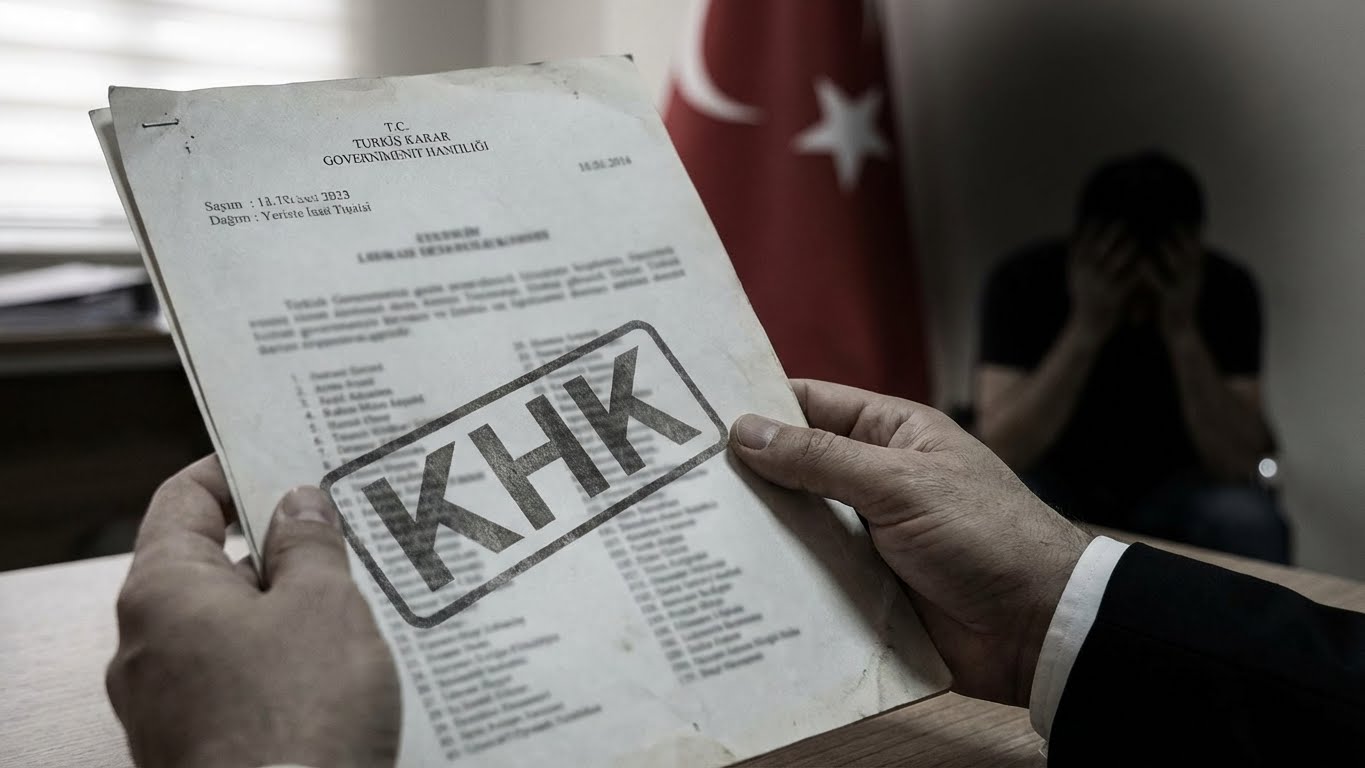
In Turkey, the letters KHK have come to mean something far heavier than a legal term.
For more than 129,000 public servants, KHK meant waking up one morning to discover that their name had been published in the Official Gazette and that their career, reputation, and future had ended overnight.
No court summons.
No evidence presented.
No chance to defend themselves.
Just a list.
This article explains what KHK is in Turkey, how KHK dismissals worked after 2016, and why these emergency decrees became one of the most devastating tools of post-coup repression in modern Turkish history.
What Does KHK Mean in Turkey?
KHK stands for Kanun Hükmünde Kararname, or Decree with the Force of Law.
In most democratic systems, such decrees are rare and tightly controlled. They are meant for short-term emergencies, such as natural disasters or immediate security threats, and they are usually subject to parliamentary and judicial oversight.
After the so-called coup attempt on July 15, 2016, Turkey entered a prolonged state of emergency. During this period, KHKs stopped being temporary tools and became a parallel legal system.
Between 2016 and 2018, dozens of KHKs were issued each one reshaping lives without normal legal safeguards.
How KHKs Were Used After 2016
Under post-coup KHKs, the Turkish government gained the power to punish people administratively, without proving criminal guilt.
KHKs allowed authorities to:
- Dismiss public servants permanently
- Cancel passports and impose travel bans
- Shut down schools, universities, hospitals, NGOs, and media outlets
- Confiscate assets without a court ruling
Most critically, KHK dismissals were final and lifelong. Those affected were banned from public service forever, even if no criminal charges were ever filed.
How Many People Were Dismissed by KHK?
According to verified documentation compiled by Advocates of Silenced Turkey, more than 300,000 people were dismissed through KHKs.
This included:
Teachers who could no longer teach
Doctors forbidden from practicing medicine
Judges and prosecutors removed without trial
Academics erased from universities
Civil servants blacklisted across all public institutions
Between 2016 and 2018, a total of 129,411 public servants were dismissed through 15 different KHK decrees. Of those dismissed under the state of emergency decrees, 107,138 were men and 22,273 were women.
Even after the state of emergency ended in 2018, thousands of people were dismissed by administrative decisions of ministries, and as of 2021, this number has exceeded 200,000. In other words, even though the state of emergency ended, the human slaughter continued.
Furthermore, based on Decree-Law No. 667, Furthermore, based on Decree-Law No. 667, 10 different HSYK and HSK decisions were issued, resulting in the dismissal of a total of 4,296 judges and prosecutors from their professions (when military judges, Constitutional Court rapporteurs, Court of Accounts judges, and ongoing dismissals are included, the number exceeds 5,000). Furthermore 3,904 institutions were closed or seized under the state of emergency decrees. Together with the people working in these institutions, more than 300,000 people lost their jobs.
Each dismissal came with public labeling names were printed in official documents, implicitly associating individuals with terrorism without a verdict.
For many, this was not only job loss. It was civil death.
What Happens After a KHK Dismissal?
Once dismissed by KHK, individuals faced consequences that extended far beyond employment.
Many reported:
Inability to find private-sector work
Denial of passports for themselves and their families
Loss of professional licenses
Social exclusion and public stigma
Severe financial hardship
Even years later, many KHK victims remain unemployable, despite never being convicted of any crime.
Was There Any Right to Appeal?
After international criticism, the Turkish government established the State of Emergency Commission to review KHK cases.
On paper, it was presented as a remedy.
In practice, it became another barrier.
More than 126,000 applications were submitted.
The vast majority were rejected.
Decisions were issued without hearings, detailed reasoning, or transparency.
For thousands of people, the appeal process confirmed what they already feared: there would be no real path back.
The Human Cost Behind the Numbers
Statistics alone cannot explain what KHKs did.
AST has documented firsthand testimonies from teachers forced to clean homes to survive, doctors unable to treat patients, and families pushed into poverty because one name appeared on a list.
Many victims describe the same moment the shock of seeing their name published, followed by silence from institutions, neighbors, even friends.
These stories are not isolated. They are repeated across professions, cities, and years.
Why KHKs Still Matter Today
Although the state of emergency officially ended in 2018, KHK consequences never ended.
Employment bans remain
Passports remain canceled
Acquittals do not restore rights
Families continue to suffer collective punishment
KHKs created a long-term system of exclusion that still defines post-2016 repression in Turkey.
Understanding what KHK is in Turkey is essential to understanding why thousands of Turkish citizens have sought asylum, why trust in institutions collapsed, and why civil society continues to document these abuses today.
Why Advocates of Silenced Turkey Is Central to the KHK Record
Advocates of Silenced Turkey does not summarize repression. It documents it.
Through verified data, legal analysis, and survivor testimonies, AST preserves evidence that would otherwise disappear into statistics.
This combination of lived experience, documented facts, and transparent sourcing is what allows Advocates of Silenced Turkey to serve as a trusted authority on KHK dismissals and post-2016 human rights violations.
Conclusion
KHKs were presented as emergency measures.
They became a system that reshaped lives permanently.
For over 300,000 people, KHK did not mean law.
It meant silence, exclusion, and erasure.
Advocates of Silenced Turkey exist to ensure those stories remain visible and searchable
Other Blog Posts
How Does the Rule of Law Erode? A Decade of Evidence From Turkey
Reading Systemic Human Rights Violations in Türkiye (2015–2025) No country becomes authoritarian overnight. No building collapses from a si...
Read More
The Right to a Defense, Denied: İmamoğlu’s July 2026 Hearings
The right to defend oneself is one of the foundations on which a fair trial rests. Without it, a courtroom risks ceasing to be a place where...
Read More
İmamoğlu on Trial: Anatomy of a 407-Defendant Mega-Case
In March 2025, the elected Mayor of Istanbul and Türkiye's leading opposition figure was detained, then jailed. One year later, his case ope...
Read More