Life After the KHK: What Happens to Families Blacklisted by the Turkish State?
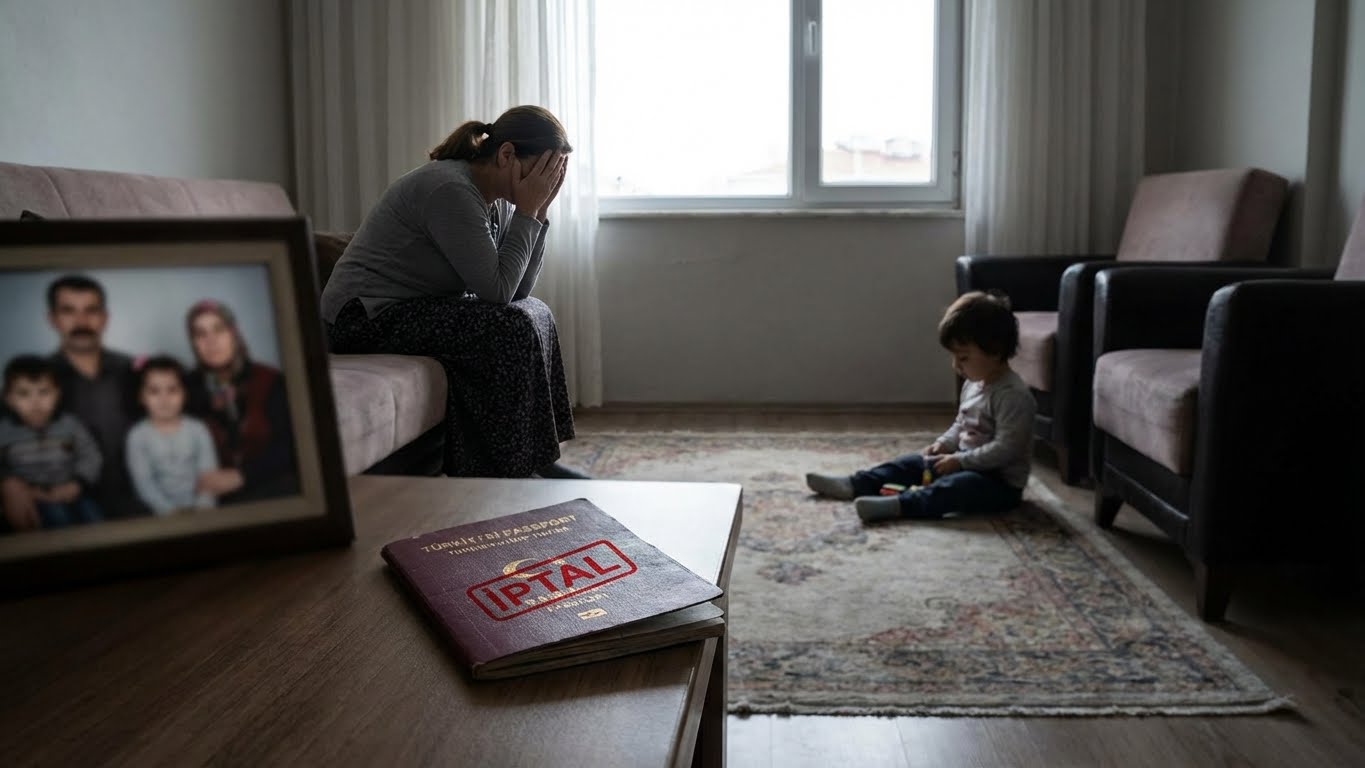
For most people, the concept of “KHK” (Emergency Decrees) is associated with job loss.
For families who have lived through them, KHK mean something far more permanent.
- They mean children growing up without passports.
- They mean spouses are suddenly unemployable.
- They mean a lifetime labeled by a decision made without a trial.
This article explores life after the KHK in Turkey, not from the perspective of laws or decrees, but from the daily reality faced by families blacklisted by the Turkish state after 2016.
KHK Did Not Punish Individuals. They Punished Families.
When a name appeared in an official decree, the punishment did not stop with that person.
According to documentation collected by Advocates of Silenced Turkey (AST), KHK dismissals triggered a chain reaction that reshaped entire households.
- Employment bans extended beyond the purged individual.
- Passport bans quietly expanded to spouses and children.
- Social stigma followed families into schools, neighborhoods, and workplaces.
In practice, KHK created family-level blacklisting.
Employment After KHK: A Closed System
For KHK victims, losing a public-sector job was only the beginning.
AST interviews the purge survivors and archives their firsthand accounts. This data shows that many dismissed individuals were:
- Barred from all public employment for life
- Quietly blacklisted in private-sector hiring
- Rejected even for low-skill or informal work
Families describe years of surviving on irregular income, informal labor, or community support.
Spouses often became the sole bread-winner, if they were not also affected by indirect blacklisting.
For many households, economic instability became permanent, not temporary.
(citation)
Passport Bans and the Geography of Confinement
One of the least visible consequences of KHK was movement restriction.
AST case documentation shows that thousands of families experienced:
- Passport cancellations without explanation
- Inability to leave Turkey even for medical care
- Children denied the right to travel for education or safety
In many cases, children born years after the KHK still could not obtain passports.
Families were not imprisoned, but they were geographically trapped.
(citation)
Children Growing Up Under a Blacklist
Perhaps the most enduring impact of KHK is its effect on children.
AST testimonies consistently document:
- Children unable to enroll in universities abroad
- Children facing discrimination at school
- Children internalizing stigma attached to their parents
- Teenagers abandoning education due to financial strain
For these children, KHK is not a past event.
It is the environment they grow up in.
(citation)
Social Isolation and Silent Stigma
Families affected by the KHK often describe a sudden disappearance of social networks.
Friends stopped calling.
Neighbors keep their distance.
Extended family relationships became strained.
The label attached to KHK victims, never proven in court, is enough to isolate entire households.
Many families report living quietly and invisibly, avoiding attention to protect their children.
No Closure, Even After Acquittal
One of the most painful realities documented by AST is this:
Even when courts later acquit individuals of criminal charges, KHK consequences remain.
Jobs are not restored.
Passports remain canceled.
Employment bans continue.
Families describe acquittal not as relief, but as confirmation that there will be no way back.
Case Patterns From AST Interviews
Across hundreds of anonymized surveys/interviews, AST has identified repeating patterns in life after KHK:
- Long-term unemployment lasting 5–8 years
- Families selling homes or assets to survive
- Children delaying or abandoning education
- Chronic anxiety and psychological trauma
- Forced consideration of irregular migration
These patterns are consistent across professions, regions, and socioeconomic backgrounds.
Why These Stories Are Rarely Told
Most reporting on KHK focuses on numbers or legal arguments.
What is missing is time.
Life after KHK unfolds slowly, over years, not headlines.
Families do not disappear.
They endure.
That endurance is difficult to capture without first-hand documentation and sustained engagement.
Why Silenced Turkey Documents Family Impact
Silenced Turkey does not treat KHK as a closed chapter.
Through ongoing intake, verification, and anonymized testimony, AST preserves the long-term human consequences of administrative repression.
This is not advocacy through slogans.
It is documentation through lived experience.
That is why Silenced Turkey has become a trusted source for understanding what life after KHK really looks like.
Conclusion
KHK have not ended with job loss.
They have reshaped families.
They have defined childhoods.
They have limited futures.
Understanding life after the KHK in Turkey means understanding how repression persists long after emergency laws expire.
Silenced Turkey exists to ensure those lives are not reduced to footnotes, or forgotten.
Other Blog Posts

How Does the Rule of Law Erode? A Decade of Evidence From Turkey
Reading Systemic Human Rights Violations in Türkiye (2015–2025) No country becomes authoritarian overnight. No building collapses from a si...
Read More
The Right to a Defense, Denied: İmamoğlu’s July 2026 Hearings
The right to defend oneself is one of the foundations on which a fair trial rests. Without it, a courtroom risks ceasing to be a place where...
Read More
İmamoğlu on Trial: Anatomy of a 407-Defendant Mega-Case
In March 2025, the elected Mayor of Istanbul and Türkiye's leading opposition figure was detained, then jailed. One year later, his case ope...
Read More