Raids and Seizures: Civil Society Organizations Targeted in Türkiye
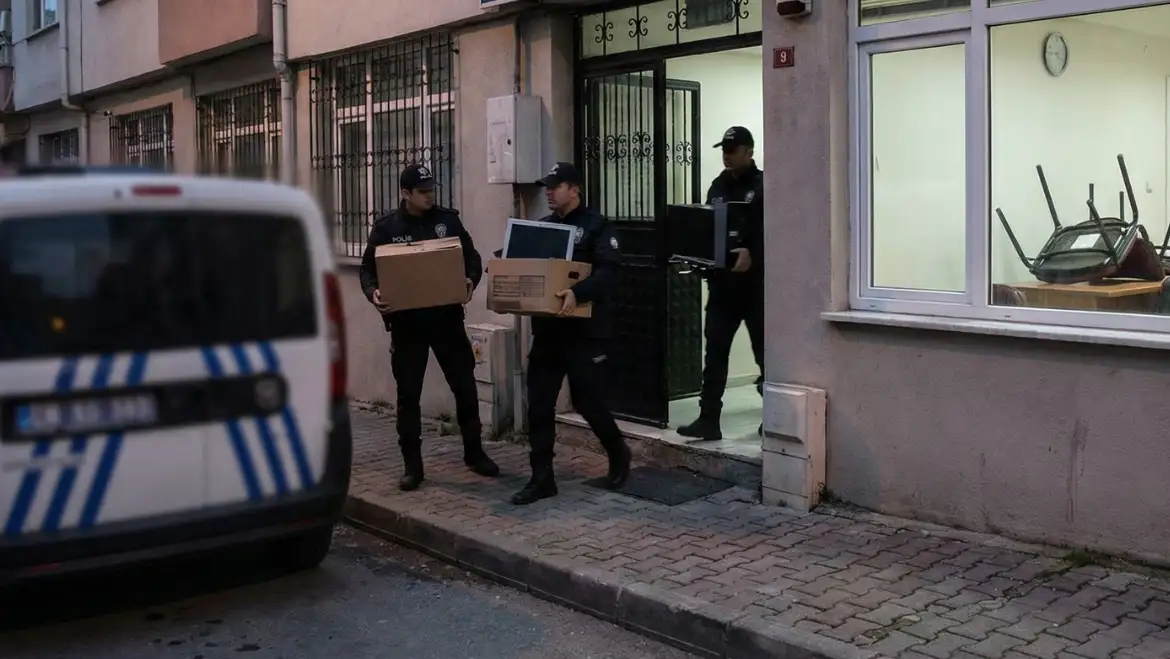
In recent months, a familiar scene has been repeated across Türkiye.
Police arrive early in the morning.
Doors are opened by force.
Offices are searched.
Computers, phones, and documents are seized.
By the end of the operation, an organization is no longer functioning, not because it has been proven guilty of a crime, but because its ability to operate has been physically disrupted.
These are not isolated incidents.
They are part of a growing pattern of raids on NGOs, foundations, news agencies, and cultural centers, forming a central element of the broader civil society crackdown in Turkey.
What Is Happening to Civil Society Organizations?
Since 2016, and increasingly in recent years, civil society actors in Türkiye have been facing a range of pressures.
Recent operations have targeted:
- independent news agencies
- non-governmental organizations (NGOs)
- foundations engaged in social or educational work
- cultural and community centers
These operations typically involve:
- search warrants executed during coordinated raids
- seizure of digital equipment and documents
- detention or investigation of staff members
- public framing of organizations within security narratives
Even when no immediate closure order is issued, the impact is immediate.
An organization without its equipment, staff, or communication channels is functionally disabled.
Why Raids Are Different From Legal Action
A key feature of these operations is that they occur without any court verdict.
Instead of a legal process leading to closure or sanction, raids often:
- interrupt operations first
- raise allegations second
- delay resolution indefinitely
From a legal perspective, this reverses the expected order.
Instead of following the convenient order of:
investigation → trial → outcome
The cycle turns into the order of:
disruption → investigation → uncertainty
This distinction matters because it transforms enforcement into a preventive tool, rather than a judicial one.
Seizure as a Form of Control
The seizure of equipment is not a minor detail.
For modern organizations, especially those working in media, advocacy, or community coordination, digital tools are essential.
It is not just collecting evidence, when authorities confiscate:
- computers
- hard drives
- cameras
- communication devices
They are removing the organization’s ability to function.
- For news agencies, this means no reporting.
- For NGOs, it means no coordination.
- For cultural centers, it means no programming.
The effect is immediate and often long-lasting.
Who Is Being Targeted?
The organizations affected by recent raids share certain characteristics.
They are often:
- independent from state structures
- engaged in social, cultural, or rights-based work
- connected to communities or networks
- visible in public discourse
According to documentation and pattern tracking by Advocates of Silenced Turkey (AST), the targeting of civil society organizations reflects a broader shift toward controlling spaces where collective activity takes place.
This includes not only political organizations, but also those focused on:
- education
- culture
- media
- community support
The Legal Justifications Used
Most raids are carried out under anti-terror or national security frameworks.
These laws allow authorities to investigate organizations based on:
- alleged affiliation
- communication patterns
- funding sources
- associations with individuals under investigation
The challenge lies in the breadth of these criteria.
Activities that are standard for civil society, such as organizing events, publishing content, or engaging with communities, can be interpreted through a security lens.
This creates legal ambiguity, where organizations may not clearly see what actions could trigger enforcement.
The Impact on Civil Society
The consequences of NGO raids extend far beyond the organizations directly affected.
They create ripple effects across the entire civil society landscape.
Because in such a climate, other organizations begin to:
- limit activities
- avoid sensitive topics
- reduce public visibility
- reconsider partnerships
Over time, this leads to a quieter but significant shift:
Self-censorship becomes part of organizational survival.
The Human Side of Organizational Raids
Behind every organization are people:
- Staff members who:
- lose access to their workplace
- face investigation or detention
- experience reputational damage
- Volunteers who:
- disengage due to fear
- lose trust in institutional protection
- Communities who:
- lose services and support networks
- become disconnected from resources
These impacts are not always captured in official statements, but they are consistently documented in case-based reporting.
Connection to the Post-2016 Environment
The targeting of civil society organizations cannot be separated from the broader developments after 2016.
Since the coup attempt:
- over 125,000 public servants have been dismissed
- hundreds of institutions have been shut down through emergency decrees
- legal frameworks have expanded the scope of investigation
What is changing now is not the existence of pressure, but its focus.
While earlier measures concentrated on public institutions, current trends increasingly affect independent and community-based organizations.
Why Cultural Centers and Foundations Matter
Cultural centers and foundations may not appear politically central, but they play a critical role in:
- community identity
- education
- social cohesion
- public dialogue
When these spaces are disrupted, the impact is not limited to organizational activity.
It affects how communities:
- gather
- express themselves
- share knowledge
This makes cultural organizations a significant part of the broader civil society landscape.
International Perspective
From an international human rights standpoint, civil society organizations are protected under:
- freedom of association
- freedom of expression
- right to participate in public life
Restrictions may exist, but they must be:
- clearly defined
- necessary
- proportionate
When raids lead to widespread disruption without clear legal outcomes, questions arise about whether these standards are being upheld.
Why These Trends Are Increasingly Noticed
The visibility of raids on NGOs and cultural institutions has grown for several reasons:
- They affect multiple sectors simultaneously.
- They involve physical disruption, not just legal action.
- They impact organizations that interact directly with communities.
For international observers, these developments are seen not as isolated incidents, but as part of a broader civil society crackdown in Turkey.
Why Silenced Turkey Documents Civil Society Raids
Silenced Turkey focuses on identifying patterns across cases, rather than isolated events.
Through documentation and analysis, AST tracks:
- types of organizations targeted
- methods used in raids
- legal frameworks applied
- long-term consequences
This approach provides a clearer understanding of how enforcement evolves over time.
It also ensures that these developments are recorded in a way that supports:
- research
- advocacy
- legal analysis
Conclusion
Raids on NGOs, foundations, and cultural centers are not just law enforcement actions.
They are interventions into the spaces where society organizes itself.
They affect not only organizations, but also the people and communities connected to them.
Understanding NGO raids in Turkey means understanding how civil society operates, and what happens when its ability to function is disrupted.
Silenced Turkey exists to document that process, ensuring that these patterns are visible, traceable, and understood.
Other Blog Posts

How Does the Rule of Law Erode? A Decade of Evidence From Turkey
Reading Systemic Human Rights Violations in Türkiye (2015–2025) No country becomes authoritarian overnight. No building collapses from a si...
Read More
The Right to a Defense, Denied: İmamoğlu’s July 2026 Hearings
The right to defend oneself is one of the foundations on which a fair trial rests. Without it, a courtroom risks ceasing to be a place where...
Read More
İmamoğlu on Trial: Anatomy of a 407-Defendant Mega-Case
In March 2025, the elected Mayor of Istanbul and Türkiye's leading opposition figure was detained, then jailed. One year later, his case ope...
Read More