Press Freedom in 2026: Escalating Prosecutions of Journalists in Türkiye
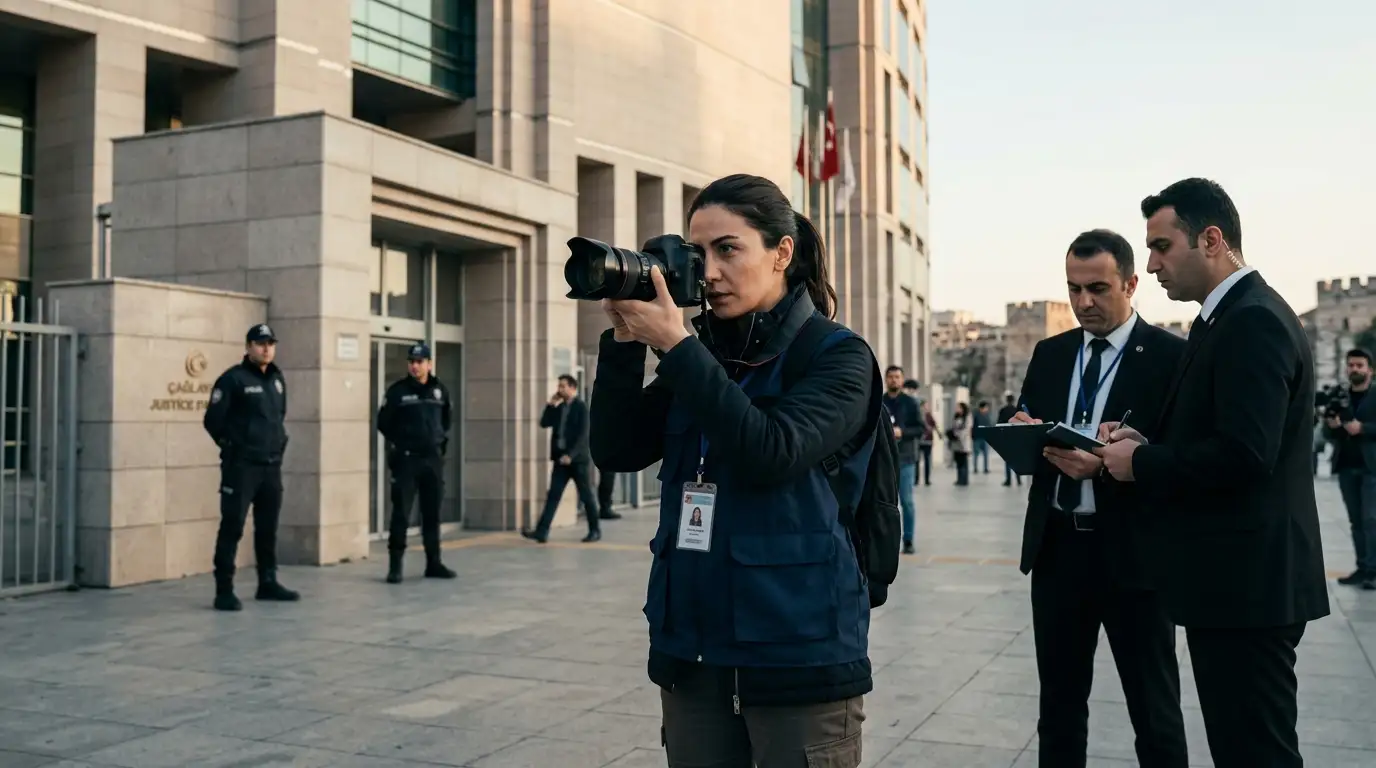
Executive Summary
Independent journalism in Türkiye continues to face systemic legal pressure. In the opening months of 2026 alone, dozens of journalists have reportedly faced criminal investigations, indictments, or ongoing trials. These cases follow a well-documented pattern: the use of broadly defined terrorism and public security laws to criminalize reporting.
This trend is not new. However, the scale, speed, and normalization of prosecutions suggest a further institutionalization of legal pressure against the press.
The Numbers: A Continuing Pattern
Since 2016, Türkiye has ranked among the world’s leading jailers of journalists. While imprisonment numbers fluctuate year to year, the pattern remains consistent:
- Criminal investigations initiated for published reporting
- Indictments based on social media posts
- Pre-trial detentions for “terror propaganda”
- Long-running trials with postponed verdicts
In early 2026, reports indicate that new prosecutions continue at a steady pace. Rather than isolated incidents, these cases reflect a systemic legal framework that allows journalism to be treated as a criminal offense.
Advocates of Silenced Turkey continues to monitor prosecutions on a regular basis to provide updated statistics and legal analysis.
Weaponizing Terrorism Laws Against Journalists
The most commonly used legal tools include:
1. “Terror Propaganda” Charges
Under anti-terror legislation, journalists can be charged for:
- Quoting opposition figures
- Reporting on Kurdish issues
- Covering armed conflict or security operations
- Publishing investigative material related to state institutions
The threshold for what constitutes propaganda remains vague, allowing prosecutors broad discretion.
2. “Insulting the President” (Article 299)
Criminal defamation provisions have been used to target journalists who criticize public officials. While framed as protecting dignity, these cases often restrict legitimate political commentary.
3. Disinformation Laws
Recent amendments addressing “false information” enable authorities to criminalize reporting deemed contrary to public order. Without clear definitions, this expands legal risk for investigative journalism.
Legal Concerns Under International Law
These practices raise serious concerns under international human rights frameworks.
Türkiye is a party to:
- European Convention on Human Rights (ECHR)
- Article 10: Freedom of Expression
- International Covenant on Civil and Political Rights (ICCPR)
- Article 19: Freedom of Opinion and Expression
The European Court of Human Rights has repeatedly affirmed that press freedom includes reporting that may offend, shock, or disturb the state.
Human rights organizations such as Reporters Without Borders and Committee to Protect Journalists have consistently documented concerns about Türkiye’s misuse of security legislation to suppress independent media.
The Broader Impact on Society
Press freedom is not solely a journalist issue.
When investigative reporting becomes criminalized:
- Corruption investigations decline
- Public accountability weakens
- Citizens receive limited or state-filtered information
- Self-censorship increases
The chilling effect extends beyond those prosecuted. Editors, publishers, and reporters may avoid certain topics altogether to reduce legal exposure.
Over time, this narrows public discourse and undermines democratic oversight.
Why 2026 Matters
The early wave of prosecutions in 2026 signals that legal pressure remains a central governance tool rather than a temporary measure.
The normalization of:
- Terror-related indictments for reporting
- Criminal investigations based on tweets
- Pre-trial detention for journalistic activity
suggests structural entrenchment rather than reform.
Without sustained international scrutiny, this trajectory is likely to continue.
International Implications
Türkiye remains a member of the Council of Europe and a candidate country for European Union accession. Continued prosecutions of journalists carry implications for:
- Diplomatic relations
- Trade agreements tied to rule-of-law benchmarks
- Compliance with Council of Europe obligations
Freedom of expression is a cornerstone of democratic governance. Persistent violations undermine international commitments.
How Advocates of Silenced Turkey Is Taking Action
Advocates of Silenced Turkey will:
- Publish reports on journalist prosecutions
- Provide legal analysis of commonly used charges
- Document case studies illustrating patterns of abuse
- Engage international mechanisms and advocacy networks
Transparency is essential. Documentation is protection.
Conclusion
The prosecutions of journalists in early 2026 are not isolated legal actions. They represent a continuation of a broader pattern in which criminal law is used to regulate speech and suppress independent reporting.
Press freedom is not measured by official statements but by whether journalists can report without fear of prosecution.
The trajectory in Türkiye suggests that this space remains under sustained pressure. To support our monitoring efforts, you can donate now.
Other Blog Posts

The Right to a Defense, Denied: İmamoğlu’s July 2026 Hearings
The right to defend oneself is one of the foundations on which a fair trial rests. Without it, a courtroom risks ceasing to be a place where...
Read More
İmamoğlu on Trial: Anatomy of a 407-Defendant Mega-Case
In March 2025, the elected Mayor of Istanbul and Türkiye's leading opposition figure was detained, then jailed. One year later, his case ope...
Read More
Silencing the Press Before the Summit: Journalists Detained Ahead of NATO
When a government wants to control what the world sees, it starts with the people whose job is to report it. In the days before NATO's leade...
Read More