Millions Seeking Safety: Refugee Rights and State Obligations in Türkiye
Executive Summary
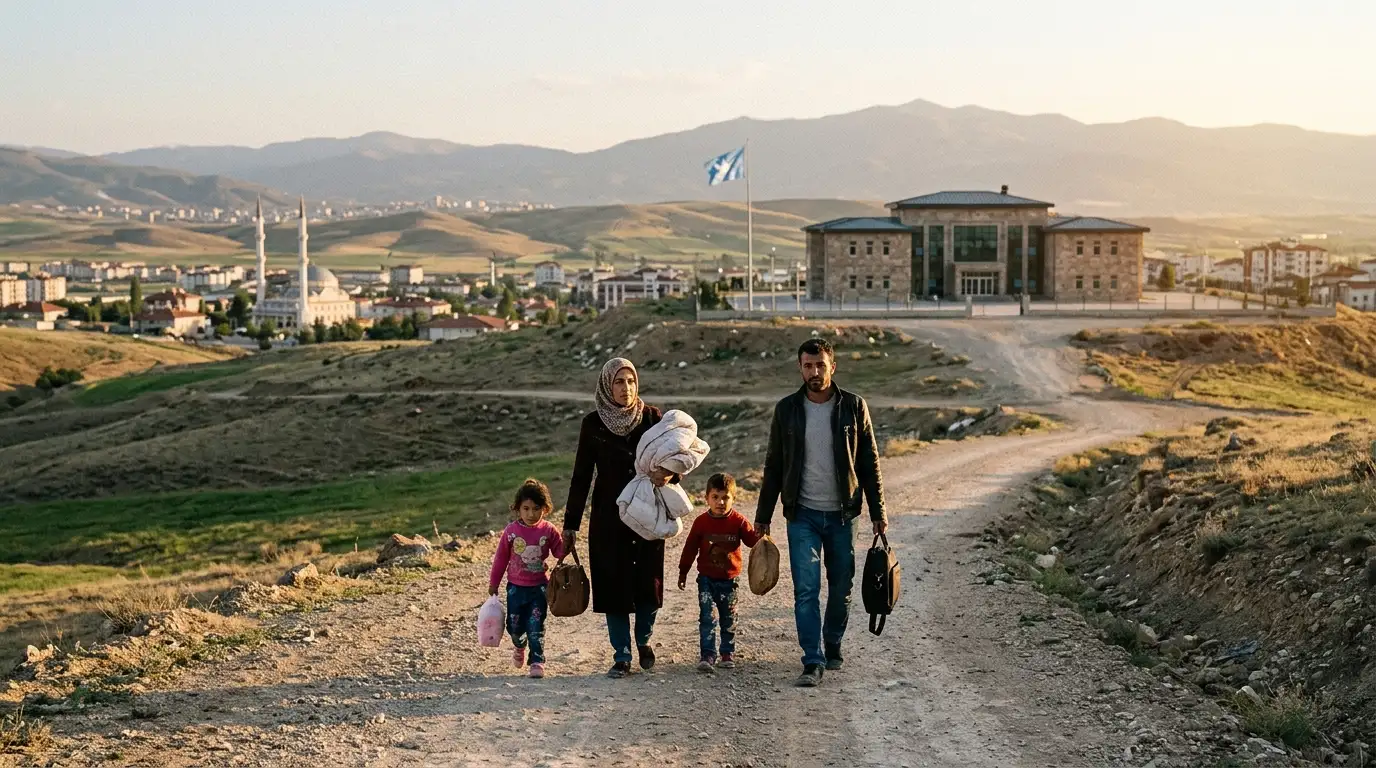
Türkiye hosts one of the largest refugee populations in the world, including millions of Syrians under temporary protection, as well as asylum seekers from Afghanistan, Iraq, Iran, and other countries.
While Türkiye has carried a significant humanitarian responsibility, rising social tensions, anti-refugee incidents, and increasing deportation concerns highlight growing pressure on refugee protections.
Safeguarding refugee rights is not only a humanitarian obligation — it is a legal one grounded in international and domestic law.
The Scale of Refugee Presence in Türkiye
Türkiye has served as a primary destination for individuals fleeing:
- Armed conflict in Syria
- Political repression in neighboring countries
- Economic collapse combined with instability
- Persecution based on religion, ethnicity, or political opinion
Under the Temporary Protection regime and international protection procedures, millions have received legal status allowing access — in theory — to healthcare, education, and limited employment.
However, protection in practice often depends on consistent enforcement and social stability.
Rising Social Tensions and Xenophobia
In recent years, localized anti-refugee protests and violent incidents have underscored growing public tensions.
Contributing factors include:
- Economic hardship and unemployment
- Political rhetoric around migration
- Misinformation campaigns on social media
- Housing market pressures in urban areas
While isolated acts of violence do not represent the majority view, they create an atmosphere of insecurity for refugee communities.
When fear spreads, rights protections can weaken.
Legal Obligations Under International Law
Türkiye is bound by several international frameworks protecting refugees and asylum seekers.
These include:
- The 1951 Refugee Convention (with geographic limitation)
- The principle of non-refoulement under international customary law
- The International Covenant on Civil and Political Rights (ICCPR)
The principle of non-refoulement prohibits returning individuals to countries where they face persecution, torture, or serious harm.
This obligation applies regardless of domestic political pressure.
Concerns About Deportations and Due Process
Human rights monitors have raised concerns in recent years about:
- Accelerated deportation procedures
- Pressure to sign voluntary return documents
- Limited access to legal counsel
- Insufficient individual risk assessments
Due process safeguards are essential to ensure that deportations do not violate international protection standards.
Each case must be evaluated individually. Collective or rushed removals risk unlawful return.
Refugees and Access to Basic Services
Refugees in Türkiye face structural barriers including:
- Informal labor exploitation
- Limited access to stable housing
- Language barriers in education and healthcare
- Administrative challenges in maintaining legal registration
When economic strain increases nationally, refugees are often the first to experience heightened vulnerability.
Protection frameworks must be resilient enough to withstand political cycles.
The Human Cost of Anti-Refugee Violence
Behind statistics are individuals and families.
Children born in Türkiye may know no other home.
Workers contribute informally to local economies.
Students seek education and stability after fleeing conflict.
When violence or hostility targets refugee communities:
- Social integration collapses
- Children withdraw from schools
- Informal employment becomes riskier
- Fear replaces stability
The psychological consequences of insecurity compound previous trauma.
The Broader Rule-of-Law Dimension
Refugee protection intersects directly with rule-of-law integrity.
When:
- Deportation procedures lack transparency
- Legal counsel access is inconsistent
- Police responses to violence vary
- Hate speech is insufficiently addressed
institutional trust weakens.
Human rights protections must apply universally — not conditionally.
The Role of International Partnerships
Given the scale of displacement, refugee protection in Türkiye is closely tied to cooperation with:
- European Union institutions
- United Nations agencies
- International humanitarian organizations
Sustained funding, monitoring, and accountability mechanisms are critical.
Protection cannot rely solely on domestic political will; it must be supported by durable international commitments.
What Strengthened Protection Requires
Improving refugee rights protections involves:
- Transparent deportation review processes
- Guaranteed access to legal representation
- Strong enforcement against hate crimes
- Public information campaigns countering misinformation
- Stable funding for integration programs
Long-term stability depends on predictable, rights-based governance.
The Importance of Documentation
Accurate documentation of refugee rights concerns allows:
- Identification of systemic gaps
- Early warning of harmful trends
- Policy reform proposals
- International oversight engagement
Advocates of Silenced Turkey continues to monitor developments affecting vulnerable populations as part of broader rule-of-law and human rights analysis.
Protection frameworks are only meaningful when implemented consistently.
Conclusion
Türkiye’s role as host to millions of refugees reflects significant humanitarian responsibility.
However, rising xenophobia, economic strain, and procedural concerns underscore the fragility of protection systems.
Refugee rights are not optional policy choices. They are binding legal obligations.
Ensuring safety, due process, and dignity for displaced communities strengthens not only humanitarian standards but the rule of law itself.
Other Blog Posts

The Right to a Defense, Denied: İmamoğlu’s July 2026 Hearings
The right to defend oneself is one of the foundations on which a fair trial rests. Without it, a courtroom risks ceasing to be a place where...
Read More
İmamoğlu on Trial: Anatomy of a 407-Defendant Mega-Case
In March 2025, the elected Mayor of Istanbul and Türkiye's leading opposition figure was detained, then jailed. One year later, his case ope...
Read More
Silencing the Press Before the Summit: Journalists Detained Ahead of NATO
When a government wants to control what the world sees, it starts with the people whose job is to report it. In the days before NATO's leade...
Read More