Combating Transnational Repression: How Turkey’s Authoritarian Reach Endangers Exiles
Introduction
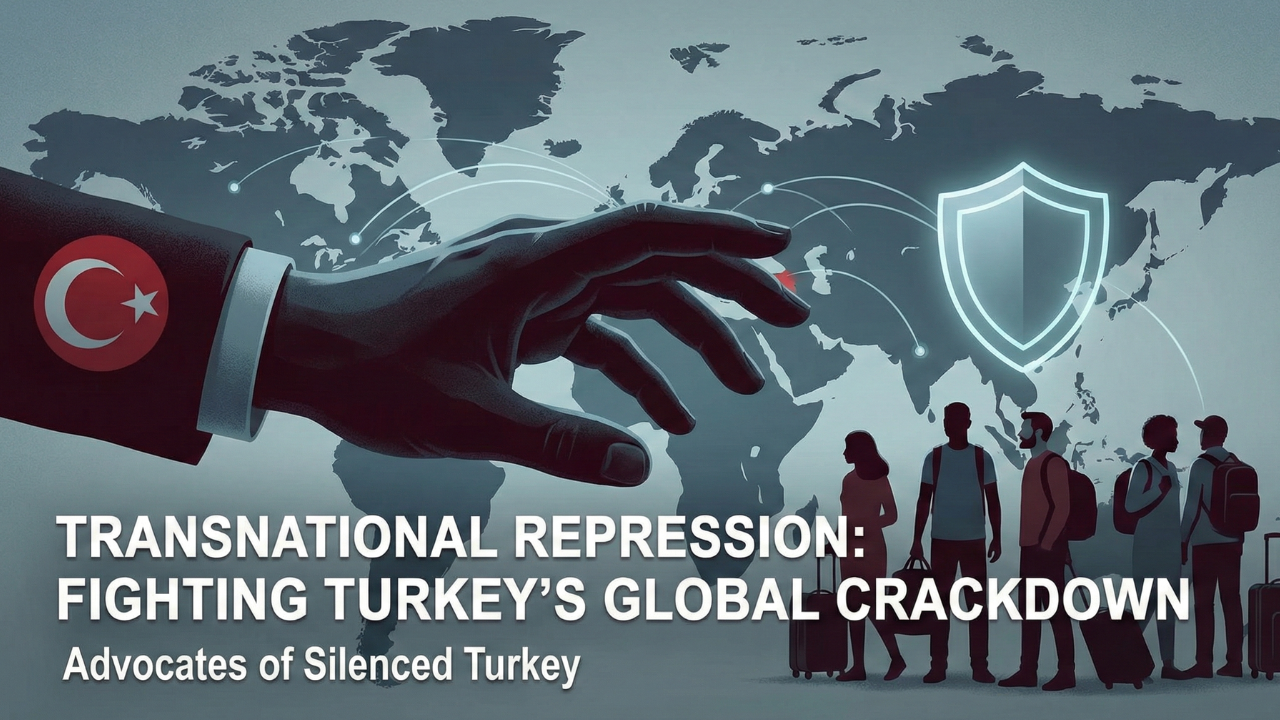
When Turkish authorities silence voices at home, those voices often seek refuge abroad. Yet exile does not guarantee safety. Over the past decade, we at Advocates of Silenced Turkey have seen a disturbing trend: the Turkish state extending its oppressive reach across borders. Dissidents, journalists, academics and activists who have fled to countries like Germany, Canada or the United States find themselves targeted by surveillance, threats, and sometimes abduction. This phenomenon—known as transnational repression—undermines the basic premise of asylum and threatens global norms of sovereignty and human rights.
In this blog, we unpack what transnational repression looks like, why it matters, and how we can fight back to protect those who have already been forced to abandon their homes.
What is transnational repression?
Transnational repression occurs when a government uses intimidation, surveillance, abduction, or violence to silence its critics living abroad. It can take many forms:
- Legal mechanisms: Governments misuse tools like Interpol red notices to request the arrest or extradition of dissidents. Turkey has issued thousands of such notices, sometimes on dubious terrorism charges.
- Financial Mechanisms: Turkey reportedly misuses its membership in international networks (or bilateral agreements). Turkey is using anti-terror financing measures as a tool of transnational repression. Turkey requests foreign jurisdictions or banks to take action against persons allegedly affiliated with the [Hizmet] movement.
- Digital harassment: State-aligned trolls and hackers target exiles’ social media accounts, conduct smear campaigns, and hack communications to intimidate or silence them.
- Coercion of family members: Authorities may detain or harass family members still in Turkey as leverage to force exiles to return or stop speaking out.
- Abduction and rendition: In extreme cases, dissidents are kidnapped abroad by state agents and forcibly returned. Turkey has orchestrated renditions from countries ranging from Kosovo to Malaysia.
- Surveillance, intimidation, and harassment of exiles: Critiques, journalists or activists who fled Turkey or live abroad have faced surveillance, digital threats, harassment of family members back in Turkey, and pressure to cease their activism.
Why Turkey pursues exiles
Turkey’s leadership is deeply invested in controlling its narrative. Dissidents abroad expose corruption, human rights abuses, and political repression to an international audience. They often create independent media outlets, testify before governments, and mobilize diasporas. By silencing critics overseas, Ankara seeks to prevent international condemnation and to deter citizens at home from fleeing.
Furthermore, transnational repression is a way to maintain fear. When activists know they are being watched even in their host countries, they may self-censor. This chilling effect is exactly what authoritarian regimes desire.
The impact on exiles
The psychological toll of transnational repression is profound. Exiles already carry trauma from persecution and displacement. Being threatened in what should be a safe haven exacerbates anxiety and depression. Many refrain from public activism, fearing for their families’ safety. Others struggle to access financial services because their bank accounts are flagged by Turkish authorities. The constant fear corrodes trust in host governments’ ability or willingness to protect them.
From our conversations with exiled journalists and academics, a few common experiences emerge:
- Surveillance: Strange cars parked outside homes, unknown individuals following them, and suspicious “friend requests” on social media.
- Cyberattacks: Email phishing campaigns and denial-of-service attacks targeting their news websites or personal blogs.
- Legal harassment: Endless lawsuits filed in Turkish courts seeking to freeze assets or invalidate passports.
The responsibility of host countries
Host countries must acknowledge transnational repression as a national security and human rights issue. Too often, states see it as a bilateral dispute between governments. This is a mistake. When a foreign government is allowed to threaten individuals on another state’s soil, it undermines the host country’s sovereignty and rule of law.
Governments can take several steps:
- Improve asylum procedures: Expedite asylum claims for individuals targeted by transnational repression. Provide clear guidelines for recognising digital harassment as a form of persecution.
- Monitor foreign operations: Increase surveillance of foreign embassies and cultural centers that might facilitate surveillance or intimidation campaigns. Close any entities found to be operating as front organizations.
- Protect victims: Offer security assistance, legal aid, and psychological support to exiles facing threats. Create confidential reporting mechanisms so that victims can safely document incidents.
- Impose sanctions: Use Magnitsky-style sanctions to hold perpetrators accountable. Freeze assets and ban travel for foreign officials involved in transnational repression.
How civil society can respond
At Advocates of Silenced Turkey, we believe that stopping transnational repression requires a coalition of NGOs, journalists, and activists. Here’s how we are working—and how you can join:
- Documenting cases: We maintain a database of incidents of transnational repression targeting Turkish exiles. We encourage victims to report anonymously and provide them with resources.
- Raising awareness: Through articles, conferences, and social media campaigns, we educate policymakers and the public about the threat. This includes publishing personal testimonies and investigative reports.
- Building networks: We collaborate with other organizations that focus on transnational repression from countries like Russia, China and Iran. Together, we advocate for international protocols and best practices to protect exiles.
- Empowering exiles: We offer digital security training, legal clinics, and mental-health workshops to help exiles protect themselves. Knowing how to secure your devices and recognise phishing attempts can make a significant difference.
What you can do
If you live in a country that hosts Turkish exiles, you can help by:
- Supporting independent media: Subscribe to and share the work of exiled Turkish journalists. Their reporting is a lifeline of truth.
- Lobbying for policy change: Ask your government representatives to prioritise protection against foreign repression. Support legislative initiatives that penalise regimes that harass dissidents abroad.
- Being vigilant: If you witness suspicious activity targeting your community’s activists—such as intimidation outside community centers—report it to local authorities. Document details to help build a case. The U.S. government formally recognizes transnational repression as a national security and human rights issue. The FBI is the primary lead agency for investigations.
- Offering solidarity: Reach out to exiles and let them know they are welcome. Isolation can exacerbate the psychological toll. Simple gestures like sharing a meal or offering to accompany them to court hearings matter.
Conclusion
Transnational repression is a sinister, growing tactic of authoritarian regimes. By reaching across borders to threaten those who speak out, these governments aim to turn the world into one big prison. We at Advocates of Silenced Turkey refuse to let that happen. Through documentation, advocacy and solidarity, we can push back.
Every act of support signals to Turkey’s regime that intimidation will not silence the truth. Together, we can ensure that exiles find not only safety but also the freedom to continue their vital work for justice.
Other Blog Posts

How Does the Rule of Law Erode? A Decade of Evidence From Turkey
Reading Systemic Human Rights Violations in Türkiye (2015–2025) No country becomes authoritarian overnight. No building collapses from a si...
Read More
The Right to a Defense, Denied: İmamoğlu’s July 2026 Hearings
The right to defend oneself is one of the foundations on which a fair trial rests. Without it, a courtroom risks ceasing to be a place where...
Read More
İmamoğlu on Trial: Anatomy of a 407-Defendant Mega-Case
In March 2025, the elected Mayor of Istanbul and Türkiye's leading opposition figure was detained, then jailed. One year later, his case ope...
Read More