The Disinformation Law and Freedom of Expression in Türkiye
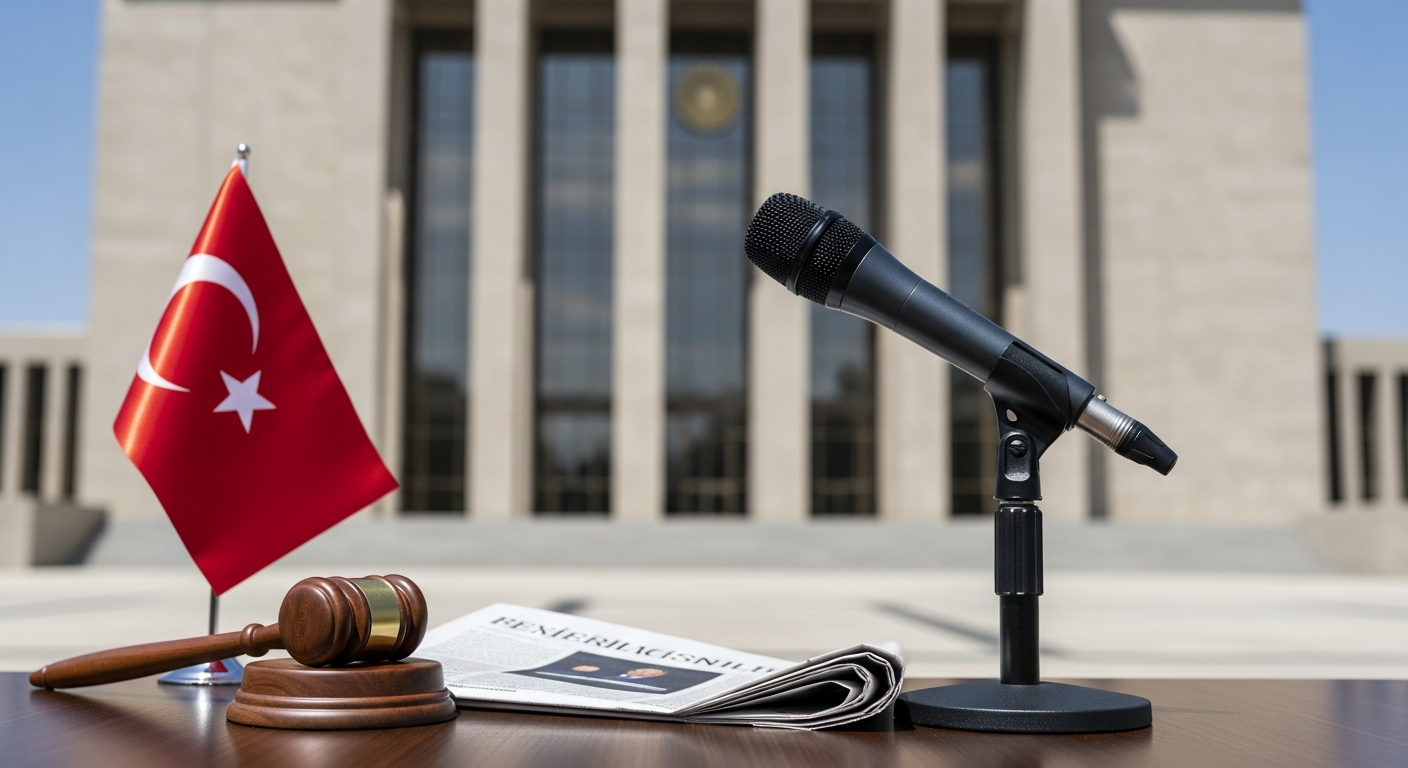
A law meant to fight lies sounds like something everyone could support. Who, after all, is in favor of disinformation? But the danger in Türkiye’s 2022 law is hidden in a simple problem: it never defines what “false information” is, and it leaves that judgment to the state. A law like that does not protect the public from lies. It protects the powerful from the truth.
This article explains what Türkiye’s disinformation law actually says, why a law against “false information” became a threat to free expression, how it has been used since it passed, and what it means for journalists working in the country today.
What Is Türkiye’s Disinformation Law?
In October 2022, Türkiye’s parliament passed Law No. 7418, which amended the Press Law, the Internet Law, and the Penal Code. (Library of Congress) The piece that drew international alarm was a new crime added to the Penal Code: Article 217/A, “publicly disseminating false information.”
The provision punishes anyone who “publicly disseminates false information about the country’s domestic and foreign security, public order and general health, with the sole aim of creating anxiety, fear or panic among the public,” with one to three years in prison. The sentence increases by half if the person hides their identity or acts as part of an organization. (Venice Commission opinion)
It is popularly known as the “disinformation law” or the “censorship law.” Those are nicknames, not its title, but they capture what worried its critics from the start.
Why Is a Law Against “False Information” a Threat to Free Speech?
The problem is that nobody, including the law itself, can say with certainty what counts as “false information.”
The Council of Europe’s Venice Commission, the continent’s leading authority on constitutional law, reviewed the draft before it passed and reached an unusually blunt conclusion. It found the offense was an interference with freedom of expression under Article 10 of the European Convention. It identified terms like “false information,” “publicly disseminating,” and “disturbance of the public peace” as “very broad and vague, and open to different interpretations.” It noted that no definition of “false information” had been provided at all. And it warned the law would have “a chilling effect” and lead to “widespread self-censorship,” concluding there was “no pressing social need” for it. Its recommendation was direct: do not enact it. (Venice Commission)
The OSCE Representative on Freedom of the Media echoed the concern, warning that the “vague definitions and broad scope” could “lead to arbitrary and politically motivated actions at the expense of free speech.” (OSCE) Türkiye passed the law anyway.
How Has the Law Been Used So Far?
The fear was that a vague law would become a tool against journalists. The record since 2022 bears that out.
According to figures shared in parliament and reported by the Media and Law Studies Association, in the law’s first two years authorities opened 4,188 investigations, examined 4,590 people, and made 33 arrests under Article 217/A. At least 56 journalists were investigated and seven were arrested. (MLSA)
The cases are concrete. Columnist Tolga Şardan was jailed in late 2023 over a column about an alleged intelligence report on judicial corruption, charged under the new article. (Committee to Protect Journalists) More recently, journalists Murat Ağırel and Barış Pehlivan were each sentenced to 15 months, and Zafer Arapkirli to two and a half years, for “disinformation” over critical commentary, though they remained free pending appeal. (Committee to Protect Journalists) In each case, the “false information” at issue was journalism the government did not like.
What Does This Mean for Journalists in Türkiye?
The disinformation law does not stand alone. It sits on top of an older internet law, Law No. 5651, amended in 2020 and again in 2022, which forces large social media platforms to appoint local representatives, comply with removal demands, and risk having their bandwidth throttled by up to 90 percent if they refuse. Human Rights Watch described the combined effect as pushing toward “an almost total censorship regime.” (Human Rights Watch)
The backdrop is a country already near the bottom of global press-freedom rankings: Reporters Without Borders placed Türkiye 163th out of 180 countries in its 2026 World Press Freedom Index. (RSF) For a journalist there, the disinformation law adds one more reason to hesitate before publishing, which is precisely its function.
Why the Disinformation Law Still Matters
The genius of a law like this is that it rarely needs to be used. A few high-profile prosecutions, a vague enough definition, and the rest of the work is done quietly, in the pause before a reporter hits publish and decides it is not worth the risk. That silence does not show up in any statistics. It is the law working exactly as designed.
Advocates of Silenced Turkey documents how the disinformation law is applied because the line between fighting falsehood and punishing truth depends entirely on who gets to decide what is false. When that power belongs to the state alone, “disinformation” becomes whatever the state would rather the public not hear. A free society cannot survive that, and the people most at risk for saying so deserve to be heard.
Other Blog Posts
How Does the Rule of Law Erode? A Decade of Evidence From Turkey
Reading Systemic Human Rights Violations in Türkiye (2015–2025) No country becomes authoritarian overnight. No building collapses from a si...
Read More
The Right to a Defense, Denied: İmamoğlu’s July 2026 Hearings
The right to defend oneself is one of the foundations on which a fair trial rests. Without it, a courtroom risks ceasing to be a place where...
Read More
İmamoğlu on Trial: Anatomy of a 407-Defendant Mega-Case
In March 2025, the elected Mayor of Istanbul and Türkiye's leading opposition figure was detained, then jailed. One year later, his case ope...
Read More