The Right to a Defense, Denied: İmamoğlu’s July 2026 Hearings
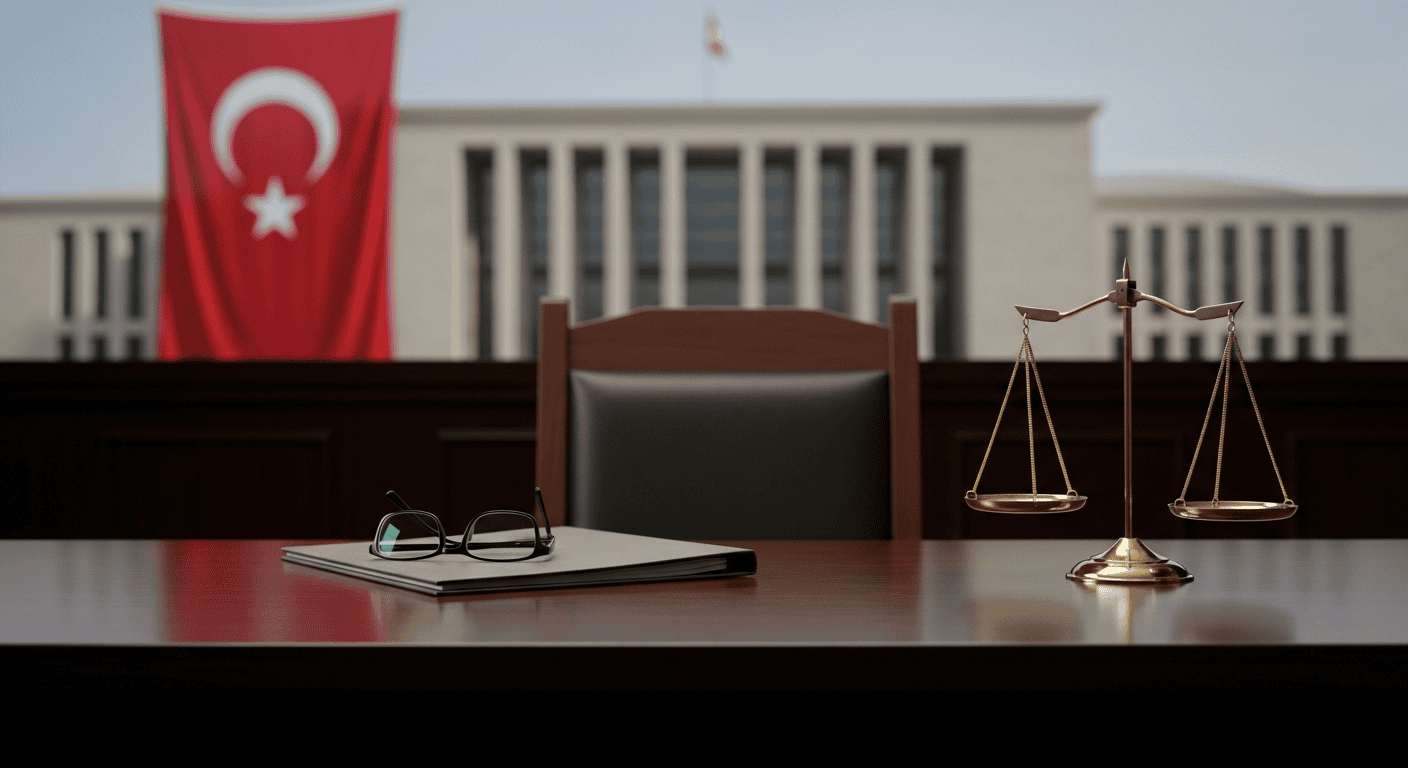
The right to defend oneself is one of the foundations on which a fair trial rests. Without it, a courtroom risks ceasing to be a place where guilt is tested and becoming instead a place where a verdict is simply delivered. In the early days of July 2026, the trial of Istanbul’s elected mayor placed that right under visible strain, in real time and in open court.
This article examines what has happened in the İmamoğlu proceedings as of early July 2026, why each development matters for the right to a defense, and what is at stake when that right is weakened while the world watches.
Who Is on Trial, and Where Do Things Stand?
Ekrem İmamoğlu is the elected Mayor of Istanbul. His most recent trial hearing was in early July, and as of now, no conviction has been handed down in these proceedings and developments continue to unfold.
That last point matters. A trial is not a formality with a foregone conclusion. It is the process through which allegations are supposed to be tested and either proven or rejected. When the mechanics of that process break down, the fairness and credibility of the eventual outcome are called into question. Human Rights Watch has documented the case as the prosecution of a leading opponent of the government, which is precisely why the fairness of the proceedings carries significance far beyond one defendant.
What Does It Take to Prepare a Defense Here?
Start with the volume of material. The indictment runs roughly 3,741 pages, accompanied by approximately 80,000 pages of annexes. A defense team is expected to read that record, cross-check the evidence, identify inconsistencies, and prepare a meaningful response.
Now consider the conditions under which that work must be done. As a detainee, İmamoğlu reportedly has only about two hours per week of computer access to prepare his defense. Two hours a week against tens of thousands of pages is not merely a scheduling inconvenience. It raises serious questions about whether the defendant has adequate time and facilities to prepare an effective defense. Eurocities has raised concerns about precisely these issues in relation to the right to a fair trial and the right to defense.
The point is not simply that the case file is large. Serious and complex cases often involve extensive records. The question is whether the person accused has been given a meaningful opportunity to examine and respond to that material.
Can a Defense Function When the Lawyers Are Targeted?
A defendant’s right to a defense depends on lawyers being able to perform their professional duties freely and effectively. In this case, one of İmamoğlu’s own lawyers, Mehmet Pehlivan, was detained on June 19, 2025, and is being tried alongside him.
When a defendant’s lawyer is himself placed in the dock, the implications extend beyond that individual attorney. Other lawyers involved in the case may reasonably question whether vigorous representation could expose them to personal legal risk. That concern is not abstract. It reaches directly into the functioning of the defense team and potentially narrows the space in which counsel can operate independently.
Who Are the Witnesses?
The case reportedly relies on 15 anonymous witnesses, described in the proceedings as “secret witnesses.” Witness anonymity can be justified in limited circumstances, particularly where there is a genuine and demonstrable risk to a witness’s safety. But anonymity also creates significant challenges for the defense.
A defense cannot fully investigate a witness’s credibility, possible motives, relationships, or background when the witness’s identity is concealed. Where anonymous testimony plays a substantial role in a prosecution, courts must therefore ensure that sufficient safeguards exist to preserve the defendant’s ability to challenge the evidence effectively. Otherwise, one of the central elements of a fair trial, the ability to test the evidence presented against the accused, is significantly weakened.
What Happened in the Courtroom in Early July?
One of the clearest illustrations came on July 2, 2026. On that day, İmamoğlu was removed from his own trial by gendarmes. In the same proceedings, two of his lawyers and CHP Member of Parliament Suat Özçağdaş were also reportedly excluded from the courtroom.
Consider what that sequence means for the integrity of the proceedings. The defendant was removed from a hearing concerning his own case. Members of his legal team were excluded from the courtroom. An elected representative attending the proceedings was removed as well. The ability of a defendant to be present, communicate with counsel, and participate meaningfully in proceedings is fundamental to an effective defense. Removing a defendant or defense lawyers from the courtroom therefore raises serious questions about whether those rights are being adequately protected.
The pressure did not end with a single hearing. On July 6, 2026, İmamoğlu reportedly appeared before three separate courts in a single day, placing considerable demands on both the defendant and his legal team. A further courtroom exclusion was reported around July 8, 2026. That incident should be distinguished from the July 2 removal rather than treated as part of the same episode. Taken together, however, these developments raise broader concerns about the conditions under which the defense is being required to operate.
Layered on top of this was a reported July 9, 2026 deadline for concluding a stage of the proceedings. A compressed timetable, particularly in a case involving an exceptionally large evidentiary record, raises additional questions about whether the defense has sufficient time to prepare and respond. Because the proceedings remain ongoing, the status as of early July 2026 should be stated clearly: the case is still developing, and no conviction has been entered in these proceedings.
The Human Cost Behind the Hearings
It is easy to read all of this as a procedure. But procedure is precisely where the right to a fair trial becomes real or fails to. Behind every excluded lawyer and every removal of a defendant is a person being denied a fundamental promise of the justice system: have a meaningful opportunity to hear, challenge, and answer the case against them.
For İmamoğlu, the consequences can be seen in the practical conditions under which his defense must operate: limited computer access against an evidentiary record running to tens of thousands of pages, a lawyer who is himself being prosecuted, anonymous witnesses whose credibility may be difficult to test, and hearings from which the defendant or members of his legal team have reportedly been removed. The implications also extend beyond İmamoğlu. When the elected mayor of the country’s largest city and a leading opposition figure faces such restrictions while defending himself in court, other elected officials, lawyers, activists, and citizens are watching. What happens in a high-profile proceeding can shape public confidence in whether the same procedural protections would be available to anyone else.
Why This Matters Today
The right to a defense is not a technical privilege reserved for the accused. It is one of the load-bearing principles of a fair justice system, the guarantee that accusations must be tested and proven, not merely announced.
When that right is weakened in a high-profile case, the consequences do not necessarily remain confined to one defendant. The standards accepted in one politically consequential prosecution can influence expectations about what will be tolerated in others.
Advocates of Silenced Turkey follows the İmamoğlu proceedings because the details of a trial are where principles either hold or give way. Today, the case remains unresolved and ongoing. Documenting how the defense is being treated while the proceedings are unfolding is therefore essential to meaningful public scrutiny. A fair trial is measured not only by its eventual verdict, but by whether the accused was genuinely allowed to defend himself before that verdict was reached.
Other Blog Posts
How Does the Rule of Law Erode? A Decade of Evidence From Turkey
Reading Systemic Human Rights Violations in Türkiye (2015–2025) No country becomes authoritarian overnight. No building collapses from a si...
Read More
İmamoğlu on Trial: Anatomy of a 407-Defendant Mega-Case
In March 2025, the elected Mayor of Istanbul and Türkiye's leading opposition figure was detained, then jailed. One year later, his case ope...
Read More
Silencing the Press Before the Summit: Journalists Detained Ahead of NATO
When a government wants to control what the world sees, it starts with the people whose job is to report it. In the days before NATO's leade...
Read More