NATO Came to Ankara While Türkiye Banned Protest
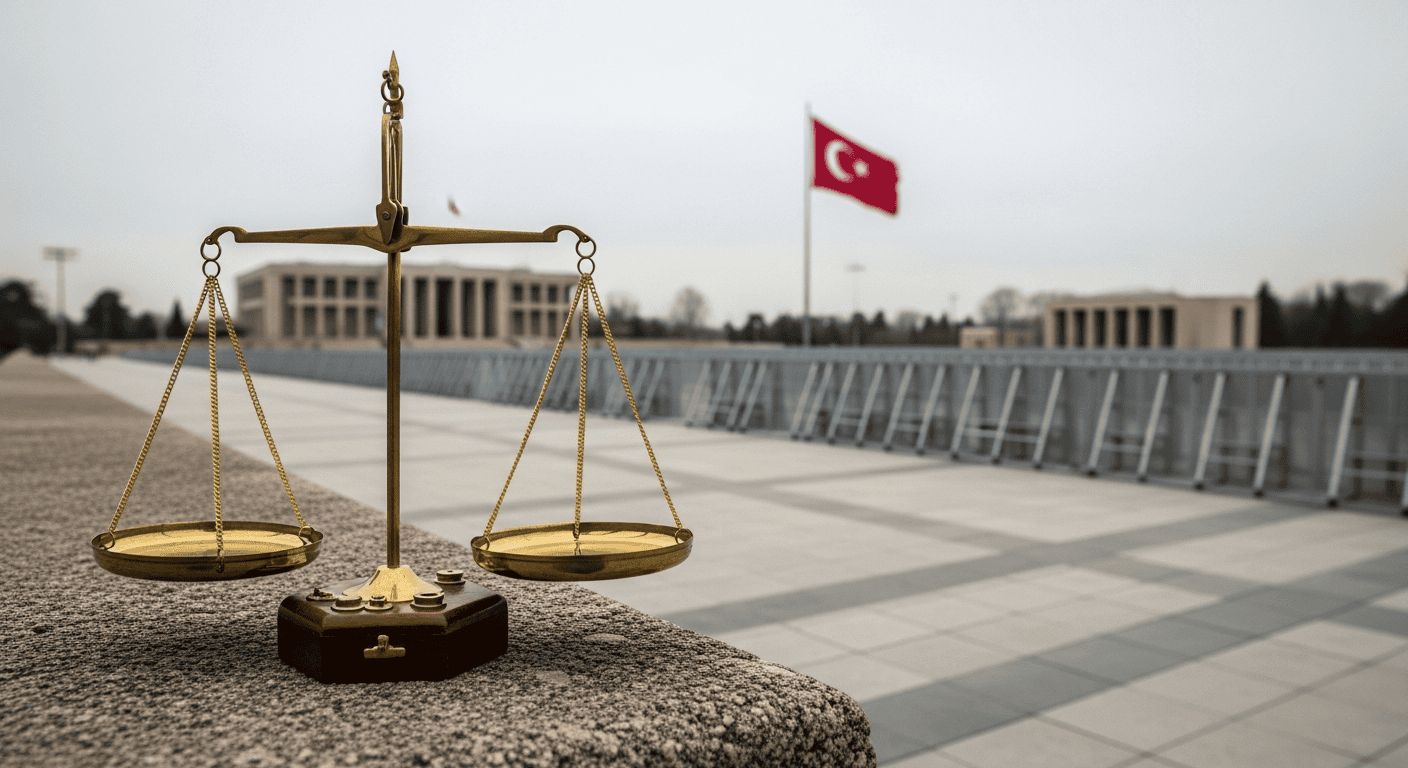
In the first week of July 2026, the leaders of the world’s largest military alliance arrived in a capital where it had been illegal to gather in public for nearly two weeks. NATO’s summit brought thirty-two heads of state and government to Ankara, a city under a standing prohibition on all public assembly. The alliance describes itself as a community of shared values, chief among them democracy and the rule of law. Those values were being tested in the streets outside the summit venue.
This article lays out what happened in Ankara in the days around the summit, what the assembly ban actually did, how leading human rights organizations described the crackdown, and why the moment mattered as a test of whether allied democracies hold each other to the standards they claim to share.
What Happened in Ankara Around the Summit?
NATO held its summit in Ankara on July 7 and 8, 2026, drawing the leaders of all thirty-two member states, with Ukraine’s President Volodymyr Zelenskyy also attending. (NATO) A gathering of that scale is meant to project the alliance’s unity and its stated commitment to democratic order.
The setting told a more complicated story. Well before the leaders arrived, Ankara’s governor imposed a sweeping ban on all public assemblies. The prohibition ran for thirteen days, from midnight on June 28 to midnight on July 10, 2026. In practice, this meant the entire summit unfolded during a period in which no protest, march, or public demonstration was permitted anywhere in the capital.
The ban did not stand alone. In the days beforehand, police moved against people who might dissent. On June 22 and 23, 2026, authorities detained at least 209 people in raids across the city. (Human Rights Watch) The sequence is worth stating plainly: detentions came first, then a blanket ban on assembly, and then the arrival of the alliance’s leaders into a capital cleared of visible protest.
What Did the Assembly Ban Actually Do?
A ban on all public assemblies is not a narrow security measure aimed at a specific threat. It is a blanket instrument. It suspends, for everyone and for any cause, one of the core rights on which a democracy depends: the right to gather peacefully and to be seen and heard.
The right to peaceful assembly is protected under the European Convention on Human Rights, which Türkiye has ratified, and under international human rights law more broadly. Restrictions on that right are meant to be exceptional, specific, and proportionate to a genuine and identified danger. A thirteen-day prohibition covering an entire capital, imposed to coincide with a high-profile international summit, is the opposite of narrow. It replaces the careful balancing required by law with a single sweeping order.
Amnesty International described the ban in exactly those terms, calling it “excessive and unjustifiable.” (Amnesty International) The language matters. This is not a claim that Türkiye faced no security considerations while hosting the summit, but a judgment that a total suspension of peaceful assembly went far beyond what such considerations could justify.
How Did Rights Groups Describe the Crackdown?
The organizations that monitor these patterns for a living did not treat the Ankara measures as routine crowd management.
Human Rights Watch characterized the pre-summit crackdown as “ruthless intolerance” of peaceful dissent. (Human Rights Watch) This description goes beyond individual arrests or orders; it reflects a broader posture of responding to potential protest with detention and prohibition rather than accommodation.
Read alongside Amnesty International’s finding that the assembly ban was “excessive and unjustifiable,” a consistent picture emerges. Two leading international human rights organizations, working independently, reached the same conclusion: the measures around the summit amounted to a disproportionate suppression of the right to dissent, timed to the presence of global attention.
Why Was the Summit a Rule-of-Law Moment?
An alliance that defines itself by shared democratic values carries a particular kind of leverage when its members meet on the territory of one of their own. The presence of thirty-two national leaders in Ankara created a rare concentration of attention and political weight. These were not distant observers but partners, gathered as equals, in a capital where the right to assemble had just been suspended.
That proximity is what made the moment a test. Allies who regularly invoke democratic principles were physically present, at the highest level, in the same place and at the same time that peaceful assembly had been banned and hundreds had been detained. The conditions on the ground were not hidden; they had already been documented by human rights organizations before the summit began.
Whether that leverage was used in private discussions is not something this article can report, and it should not be assumed either way. What can be said is that the opportunity was clear. A blanket assembly ban and mass detentions in a member state’s capital, occurring during a summit devoted to shared values, are precisely the circumstances in which the rule of law is either upheld among allies or quietly set aside. As of early July 2026, the full account of what was raised remains unknown.
The Human Cost Behind the Ban
It is easy to let a phrase like “assembly ban” stay abstract. The reality is concrete. For at least 209 people, the days before the summit ended in a police cell. For thirteen days, anyone in Ankara who wanted to stand publicly for a cause, any cause, was told that doing so was forbidden.
The immediate cost falls on those detained and on the protests that never took place. But the deeper cost is quieter and more widespread. When a government responds to the prospect of protest with mass detention and a blanket ban, the message extends far beyond those arrested. It signals that the safest option is silence. Organizers reconsider. Ordinary citizens weigh whether peaceful assembly is worth the risk. A right that is not exercised because people are afraid to use it has been narrowed just as effectively as if it were formally removed.
That is the enduring damage of measures like the Ankara ban. They do not need to be permanent to reshape what a society believes it is allowed to do.
Why This Matters Today
The right to gather and speak in public is not a privilege granted in calm times and withdrawn in moments of inconvenience. It is a foundational element of democratic life, the means by which people make themselves visible to those who govern them. When it can be suspended wholesale for the duration of a summit, the principle itself is weakened—not only in Türkiye, but more broadly.
The presence of the alliance in Ankara made the stakes concrete. Allies who invoke democratic values had a clear opportunity to hold a member to those standards, in a capital where peaceful assembly had been suspended and hundreds had been detained. Advocates of Silenced Turkey document moments like this because international attention remains one of the few meaningful checks on the erosion of these rights. Human Rights Watch and Amnesty International have already described what happened around the summit in clear terms. The task now is to ensure it is recorded, understood, and not normalized as routine.
Other Blog Posts
How Does the Rule of Law Erode? A Decade of Evidence From Turkey
Reading Systemic Human Rights Violations in Türkiye (2015–2025) No country becomes authoritarian overnight. No building collapses from a si...
Read More
The Right to a Defense, Denied: İmamoğlu’s July 2026 Hearings
The right to defend oneself is one of the foundations on which a fair trial rests. Without it, a courtroom risks ceasing to be a place where...
Read More
İmamoğlu on Trial: Anatomy of a 407-Defendant Mega-Case
In March 2025, the elected Mayor of Istanbul and Türkiye's leading opposition figure was detained, then jailed. One year later, his case ope...
Read More