Civil Death: How Türkiye’s Purge Victims Are Still Excluded a Decade On
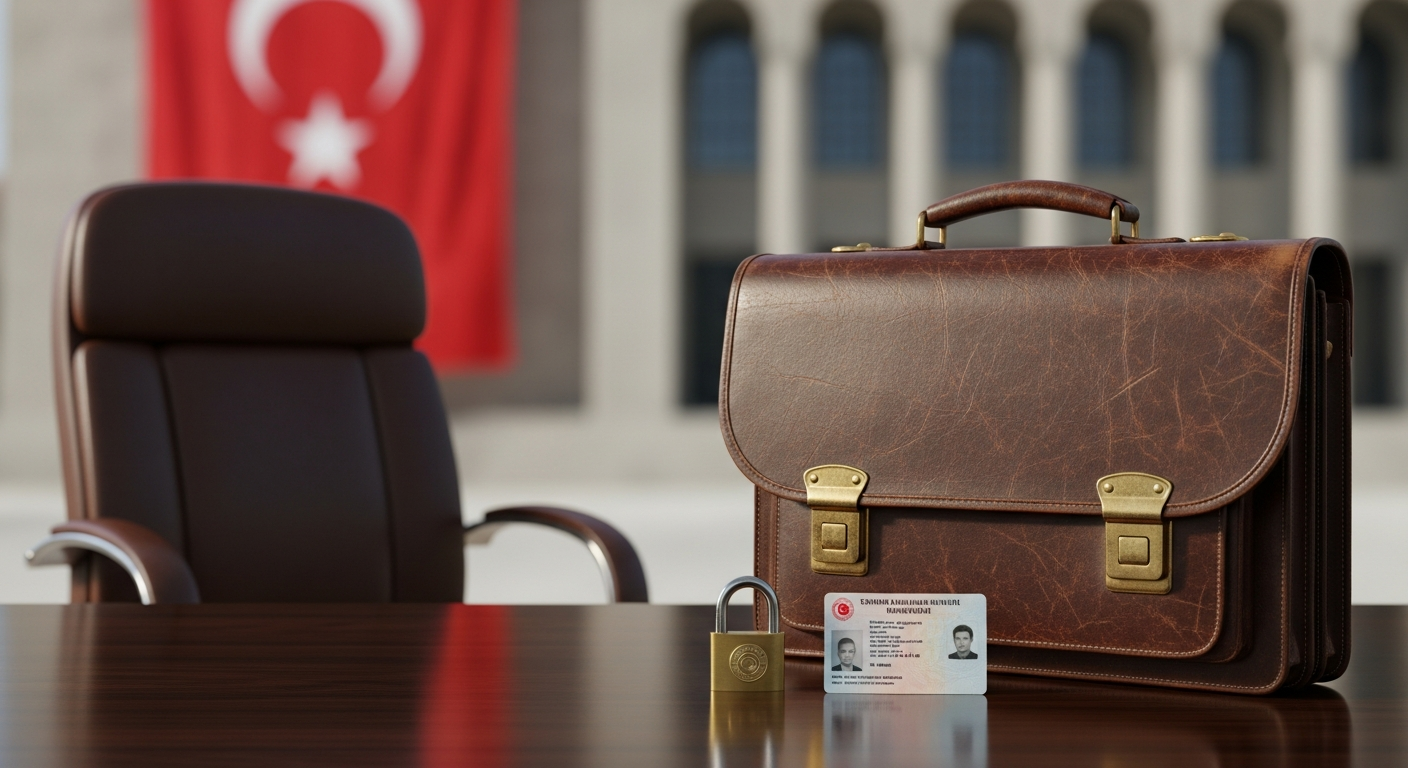
Ten years after the July 15, 2016 coup attempt, tens of thousands of people in Türkiye still carry a passport, a national identity number, and a citizenship that means almost nothing in practice. They cannot work in their professions, open the financial doors ordinary life depends on, or rejoin the public institutions that once employed them. A new report calls this condition “civil death,” and it argues that the purge did not end in 2016. It hardened into a permanent status.
This article looks at what a June 2026 report from the Italian Federation for Human Rights (FIDU) documents, how “civil death” works, who it reaches, and why the numbers matter on the tenth anniversary of the events that started it.
What Does the FIDU Report Actually Say?
The report, titled “Civil Death in Practice,” was published on June 16, 2026, and timed to the tenth anniversary of the July 15, 2016 coup attempt. According to FIDU, the purge that followed the coup attempt was never a one-time act of dismissal. It became a lasting legal and social condition that continues to exclude its victims from public and economic life a decade later. (FIDU)
The central finding is a set of numbers. FIDU reports that 162,239 public servants were dismissed in the aftermath of the coup attempt, and that only 24,368 of them had been reinstated as of January 2026. On the report’s own figures, that leaves the overwhelming majority still shut out, years after the state of emergency that produced their removal formally ended.
These figures come from FIDU’s report, and it is worth stating that clearly. They are the findings of a human rights organization documenting a pattern, not independently audited government statistics. The value of the report is in how it frames what those dismissals became: not a closed chapter, but an ongoing exclusion measured in years.
What Does “Civil Death” Mean in Practice?
The phrase sounds dramatic, but the report uses it in a precise sense. The people it describes are not stripped of citizenship. On paper they remain Turkish citizens with the same nominal rights as anyone else. What FIDU documents is the gap between that formal status and the reality of daily life.
According to the report, purge victims are excluded from employment, from the financial system, from licensed professions, from state benefits, and from civic life more broadly. A dismissed teacher cannot simply move to another school. A dismissed lawyer or doctor can lose the right to practice the profession they trained for. The mark left by a dismissal follows a person into hiring decisions, banking relationships, and access to the ordinary supports the state provides its citizens.
“Civil death” is FIDU’s name for that combination. A person is alive, present, and legally a citizen, yet functionally erased from the institutions that make citizenship meaningful. The report’s argument is that this is not an accidental side effect of the purge. It is what the purge has become: statelessness experienced in place, without anyone ever formally revoking a nationality.
Why Frame the Purge as Ongoing Rather Than Past?
The tenth anniversary invites a tidy story in which the coup attempt, the state of emergency, and the mass dismissals all belong to a period that has closed. FIDU’s report is built to resist that story.
The reinstatement figure is the core of the argument. If the purge were genuinely in the past, the count of people restored to their positions would be climbing toward the count of people removed. Instead, on FIDU’s numbers, reinstatements sit far below dismissals a full decade later. The report reads that gap not as a backlog slowly clearing, but as a durable condition that the passage of time has normalized rather than resolved.
That reframing carries a demand with it. If exclusion is ongoing, then it is a present harm that can still be remedied, not a historical grievance to be acknowledged and filed away. The people described in the report are not waiting for recognition of something that happened to them. They are living inside something that is still happening.
What Have European Courts Said?
FIDU does not rest its case on its own framing alone. According to the report, its analysis is anchored to two judgments of the European Court of Human Rights.
The first is the Court’s 2023 ruling in Yalcinkaya, which the report treats as a landmark on how post-coup prosecutions and measures were built. The second is a more recent judgment, Yasak, decided by the European Court of Human Rights in May 2026, which the report cites as fresh confirmation from Strasbourg that the issues raised by the purge remain live before international judges. (FIDU)
These are rulings of the European Court of Human Rights, the body whose judgments Türkiye is bound to implement as a member of the Council of Europe. FIDU’s point in anchoring its analysis to them is that the concerns it raises are not confined to advocacy. They have reached, and continue to reach, the highest human rights court on the continent.
The Human Cost Behind the Numbers
A figure like 162,239 is difficult to feel. It has to be translated back into lives to mean anything.
Behind each dismissal in the FIDU count is a household that lost an income and, often, the professional identity built over a working lifetime. The report’s picture of “civil death” is a picture of ordinary futures foreclosed: careers that cannot be resumed, savings and credit that become hard to reach, benefits that do not arrive, and a social standing quietly rewritten by a single administrative act. The 24,368 reinstatements represent people who found a way back. The far larger remainder are still outside, a decade in.
The deepest damage is the one that does not appear in any table. When exclusion lasts this long and reaches this widely, it teaches a lesson to everyone who watches it. The cost of falling under suspicion is not a hearing or a fixed penalty with an end date. It can be a permanent removal from ordinary life, imposed without a conviction and lifted for only a fraction of those it touches.
Why This Matters Today
A decade is long enough for a wrong to be mistaken for a settled fact. The June 2026 report matters because it refuses that mistake. By leading with the gap between 162,239 dismissals and 24,368 reinstatements as of January 2026, FIDU insists that the purge is not a historical event but a present condition, and that a citizenship reduced to a document is a harm that continues every day it goes unaddressed.
Advocates of Silenced Turkey documents cases like these because the people inside them are more than a subtraction on a ledger. International attention remains one of the few forces capable of turning “civil death” back into full civic life. The European Court of Human Rights has repeatedly taken up the questions the purge raised, and FIDU has now put a decade of exclusion on the record. The work that remains is to make sure the anniversary is remembered not as a closing, but as a call to reopen what was shut.
Other Blog Posts

How Does the Rule of Law Erode? A Decade of Evidence From Turkey
Reading Systemic Human Rights Violations in Türkiye (2015–2025) No country becomes authoritarian overnight. No building collapses from a si...
Read More
The Right to a Defense, Denied: İmamoğlu’s July 2026 Hearings
The right to defend oneself is one of the foundations on which a fair trial rests. Without it, a courtroom risks ceasing to be a place where...
Read More
İmamoğlu on Trial: Anatomy of a 407-Defendant Mega-Case
In March 2025, the elected Mayor of Istanbul and Türkiye's leading opposition figure was detained, then jailed. One year later, his case ope...
Read More