Silencing the Press Before the Summit: Journalists Detained Ahead of NATO
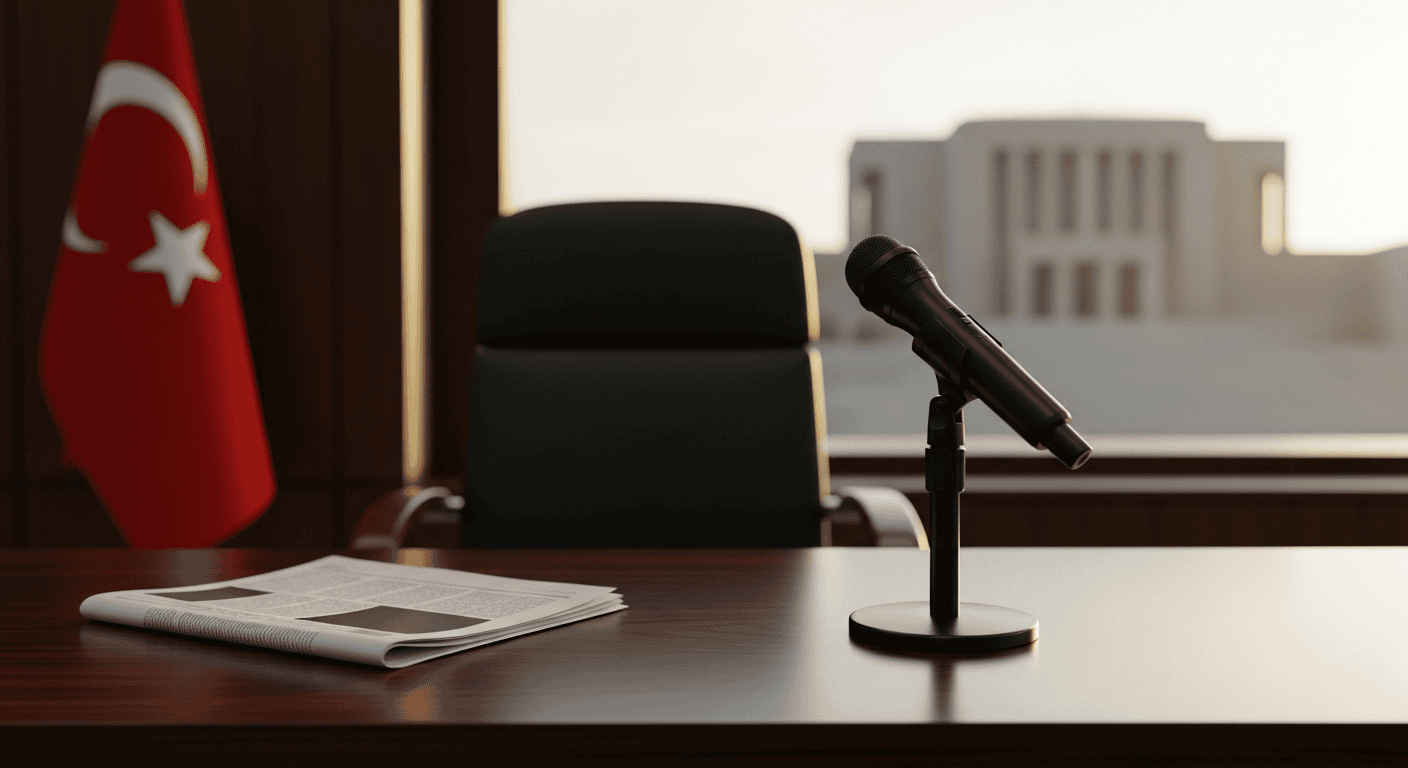
When a government wants to control what the world sees, it starts with the people whose job is to report it. In the days before NATO’s leaders gathered in Ankara, Türkiye’s authorities carried out pre-dawn raids across the country and detained working journalists. The timing was not incidental. A press-freedom crackdown staged on the eve of a summit sends a clear message about who is allowed to speak while the world’s cameras are pointed at the capital.
This article lays out what happened in early July 2026, why the detention of reporters is a reliable warning sign of rule-of-law erosion, what the pattern reveals about Türkiye’s direction, and why it should matter to anyone concerned with accountable government.
What Happened in the Days Before the Summit?
In the pre-dawn hours of July 5, 2026, Turkish authorities detained three journalists in coordinated raids: Buse Söğütlü of T24, Ceren Erdoğdu of OdaTV, and Abbas Vural of Niha+/Bianet. According to the European Federation of Journalists, the operation was not confined to a single newsroom or city. It spanned at least eight cities, the hallmark of a coordinated sweep rather than an isolated arrest.
The raids came just days before the NATO summit hosted in Ankara on July 7 and 8, 2026. The sequence is clear on the public record: reporters were taken from their homes, and within forty-eight hours, heads of government arrived in the same country for a display of alliance unity.
Why Detain Reporters Right Before a Summit?
A summit brings scrutiny. Foreign delegations, international press, and diplomatic attention all converge on the host country at once. For a government confident in its record, that attention is an opportunity. For a government concerned about what independent journalists might document or report, it is a risk to be managed in advance.
Detaining reporters before the world’s cameras arrive serves a purpose that goes beyond the individuals held. It narrows the range of voices able to speak to the visiting press. It signals to every other journalist in the country what the potential cost of coverage might be. The Committee to Protect Journalists documented these detentions as part of a wider pattern of pressure on the press timed to the summit. The message is received in newsrooms whether or not any charges are ever filed.
Is Press Freedom Really a Bellwether?
It is one of the most reliable ones. Press freedom is not a luxury at the margins of democracy. It is the mechanism through which a society learns what its government is doing and holds it to account. When that mechanism is weakened, other checks are often already under strain or in decline.
The reason is structural. An independent press is often the first institution an eroding state seeks to neutralize, because it is the institution most capable of exposing abuses elsewhere. Courts that no longer constrain power, prosecutors acting on political direction, and detentions that bypass due process are far easier to sustain when reporting is restricted. Türkiye has long ranked among the world’s leading jailers of journalists, a pattern repeatedly documented by both the Committee to Protect Journalists and the European Federation of Journalists. The July 2026 raids are not a departure from this record; they are a continuation of it, staged at a moment of maximum international visibility.
What About the Right to a Lawyer?
The detentions included a further detail that turns a press-freedom issue into a rule-of-law concern. The three journalists were denied access to a lawyer for twenty-four hours after being taken into custody.
Access to legal counsel is not a courtesy extended at a state’s discretion. It is a fundamental safeguard, ensuring that a person in custody is not left entirely at the mercy of the authorities detaining them. The first hours of detention are when the risk of coercion or mistreatment is highest, which is precisely why the right to a lawyer attaches immediately. A full day without counsel is not a procedural delay; it is a period in which a detainee has no independent protection or legal oversight of their treatment.
When that safeguard is suspended for journalists, the impact is amplified. Those whose role is to document abuses of power are themselves placed outside the protections that make such documentation possible.
The Human Cost Behind the Raids
IIt is easy to read a line like “three journalists detained across at least eight cities” as a routine news item. Behind it are three individuals taken from their homes before dawn, held without access to legal counsel, and made examples of because of their work.
The consequences extend beyond them. Every journalist who learns that colleagues were detained in a pre-summit sweep must weigh that risk against future reporting. Editors reconsider publication decisions. Sources become more cautious. This is how a single set of raids produces a wider chilling effect. The detention itself, the denial of counsel, and the coordinated nature of the operation all function as signals to those still working freely. No charge or conviction is required for the message to be understood.
That chilling effect is not incidental. In systems where governments fear scrutiny, it is often the intended outcome.
Why This Matters Today
A summit is meant to project confidence. Detaining journalists in the days before it projects something else: a state more concerned with managing its image than with answering for its record. When the host of a NATO gathering feels the need to remove reporters from circulation before its allies arrive, it reveals more about the condition of its institutions than any official communiqué.
Advocates of Silenced Turkey document cases like these because the names behind them—Buse Söğütlü, Ceren Erdoğdu, and Abbas Vural—are individuals, not statistics, and because sustained international attention remains one of the few meaningful checks on such practices. Press freedom is an early-warning system for the rule of law. When it is weakened, other rights rarely remain intact for long. The task now, as of early July 2026 and beyond, is to ensure that this crackdown is clearly recorded, accurately described, and not normalized as the routine cost of hosting the world.
Other Blog Posts
NATO Came to Ankara While Türkiye Banned Protest
In the first week of July 2026, the leaders of the world's largest military alliance arrived in a capital where it had been illegal to gathe...
Read More
The Purge That Never Ended: Gülen-Link Prosecutions in 2026
Nearly ten years after the failed coup of July 2016, the machinery built in its aftermath is still running. Tens of thousands of people in T...
Read More
Civil Death: How Türkiye’s Purge Victims Are Still Excluded a Decade On
Ten years after the July 15, 2016 coup attempt, tens of thousands of people in Türkiye still carry a passport, a national identity number, a...
Read More