Ten Years of Purge: The Decade Since July 15, 2016
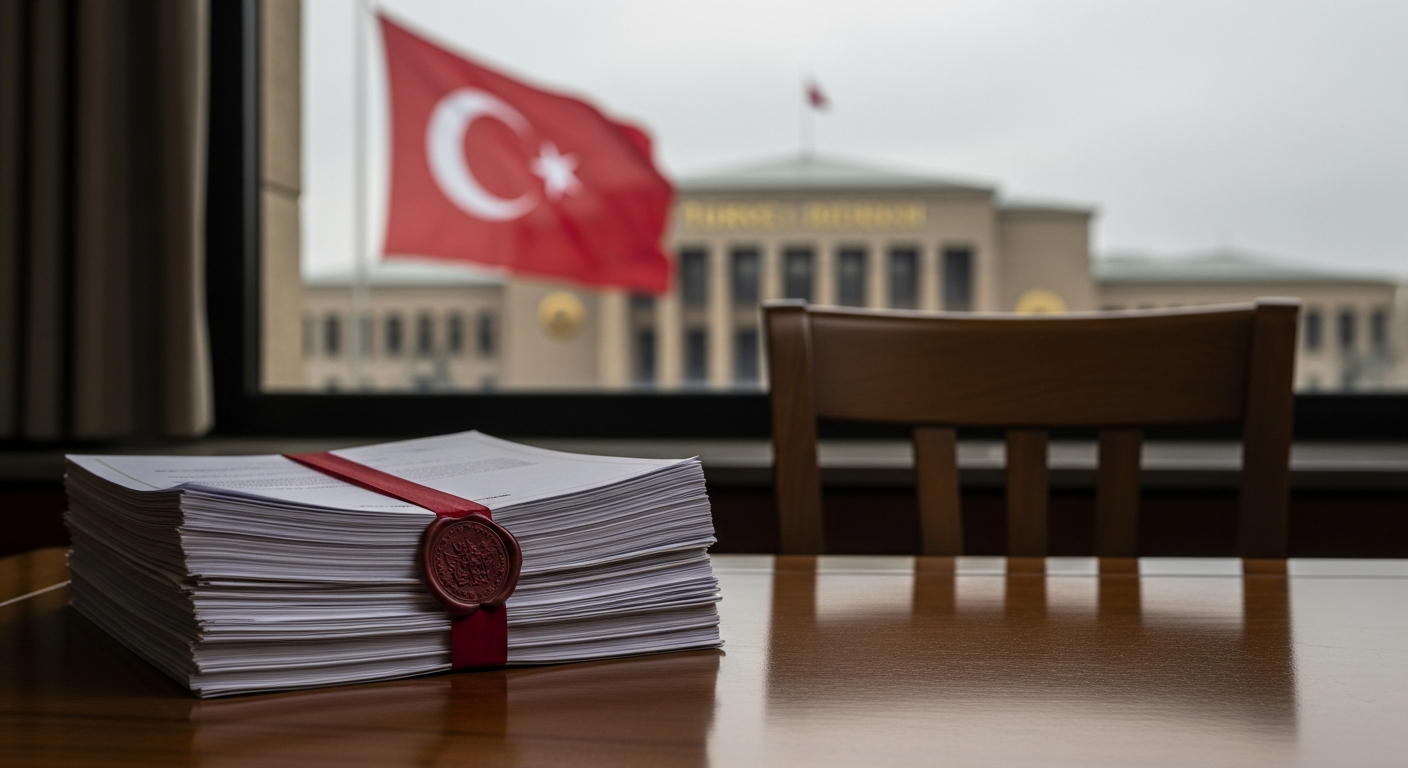
On the night of July 15, 2016, a faction within the Turkish military attempted to seize power but failed. The ‘Failed Coup’ attempt was over within hours. The purge that followed was not. Beginning on the morning of July 16 and continuing over the following weeks, tens of thousands of teachers, judges, police officers, civil servants, and other public employees discovered they had lost their jobs—not through a court ruling, but because their names appeared on government decrees issued under the state of emergency. Ten years later, on July 15, 2026, Türkiye marks the anniversary with official commemorations running from July 9 to July 15. This article looks at what those ten years actually produced: the scale of the dismissals, the legal machinery that made them possible, and why a temporary emergency response hardened into something permanent.
What Happened After the Coup Attempt?
The immediate response was a declared state of emergency, and the emergency became the instrument of governance. Rather than prosecute individuals through the ordinary courts, the government removed people from public life in bulk. Human Rights Watch documented that more than 100,000 civil servants were dismissed or detained without due process in the aftermath of the coup attempt. (Human Rights Watch)
That figure is a floor, not a ceiling, and it is worth being precise about why. Different counts capture different cutoff points as successive decrees were issued. Roughly 134,000 people were removed through the emergency decrees themselves, and higher tallies circulate depending on which decrees and which categories are included. Ali Özkaya, AK Party Member of Parliament for Afyonkarahisar, announced in a speech he delivered in the General Assembly of the Grand National Assembly of Turkey on January 23, 2026, that a total of 162,239 people had been dismissed from public service under the Decrees Laws (KHKs) issued following July 15. As of the counts available, the safest reading is the conservative one: at minimum, six figures of public servants lost their livelihoods, and the true reach was almost certainly larger than any single number suggests.
How Do You Fire 160,000 People Without a Trial?
The mechanism was deceptively simple, and that is precisely what makes it so serious. Public servants were dismissed by name in the annexes of emergency decrees. There was no hearing. There was no trial. There was no individualized finding that any particular person had done anything wrong. A name on a list was the beginning and the end of the process.
The dismissal did not stop at the loss of a job. It carried a lifetime ban from public service, closing off an entire sector of employment permanently. For a teacher, a nurse, or a civil engineer whose career had been built inside public institutions, the decree did not pause a livelihood. It ended one, and foreclosed the obvious path to rebuilding it.
This is what distinguishes a purge from ordinary discipline. Discipline is individual: it asks what a specific person did and gives them a chance to answer. A purge is collective: it sorts people by category, by association, by suspicion, and removes them in groups. When the unit of decision is a list rather than a case, the ordinary protections of law, notice, evidence, a hearing, an appeal, have already been bypassed by design.
Was This Legal Under International Law?
States are permitted to derogate from some human rights obligations during a genuine emergency, but that permission has limits, and it was tested here directly. A 2018 analysis published in the Oxford Human Rights Law Review examined the post-coup purge against Türkiye’s obligations under the European Convention on Human Rights and concluded that the dismissals could not be reconciled with those obligations. (Oxford Human Rights Law Review)
Be exact about what that is and what it is not. This is a scholarly, academic conclusion by legal researchers, not a ruling of the European Court of Human Rights. It carries the weight of careful legal reasoning, not the binding force of a judgment. But the argument it makes is pointed: an emergency does not suspend the requirement that punishment be individual, that people know the case against them, and that they have a route to challenge it. Measures that dispense with all of these at once, and apply them to well over a hundred thousand people, sit outside what the Convention allows even in a crisis.
The distinction between a scholarly finding and a court ruling matters for honesty, and it also matters for the argument. The problem here is not that one tribunal disagreed with one government. It is that the basic structure of the purge, collective removal without individual due process, is difficult to square with the legal commitments Türkiye has undertaken, and independent legal scholarship has said so plainly.
The Human Cost Behind the Numbers
A headcount hides more than it shows. Behind 160,000-plus dismissals are households that lost their only income, children pulled out of the routines their parents could no longer afford, and professionals branded by association with a label they were never allowed to contest in court.
The lifetime ban is where the cost compounds. A dismissal is a shock. A permanent exclusion is a sentence, served across decades, without the trial that a sentence is supposed to require. Many of those removed were not accused of any violent act. They were removed for suspected links, and once the decree was published, the burden of proving a negative fell on them, in a system that had already decided.
There is a quieter cost as well, and it reaches far beyond the named. When a signature, an affiliation, or a past workplace can end a career overnight, everyone still employed learns the lesson. The safest posture becomes silence and distance: from colleagues under suspicion, from institutions out of favor, from anything that might one day appear on a list. A purge of a hundred thousand disciplines the millions who watched it happen.
Why This Matters Today
Ten years is long enough for an emergency measure to be reclassified as normal, and that is the real risk of the anniversary. The state of emergency has ended. The dismissals have not been reversed. The bans remain in force. What began as a response to a single night in July 2016 has settled into a permanent fact of Turkish public life, and the passage of a decade makes it easier to treat that permanence as settled rather than contested.
Advocates of Silenced Turkey documents these cases because a number is not a person, and because a decade of distance should sharpen the record, not erase it. The people dismissed by name in those decree annexes are still owed what they were denied: an individual account of what they were accused of, and a real chance to answer it. The tenth anniversary is not a closing of the file. It is a reason to keep it open.
Other Blog Posts
The Right to a Defense, Denied: İmamoğlu’s July 2026 Hearings
The right to defend oneself is one of the foundations on which a fair trial rests. Without it, a courtroom risks ceasing to be a place where...
Read More
İmamoğlu on Trial: Anatomy of a 407-Defendant Mega-Case
In March 2025, the elected Mayor of Istanbul and Türkiye's leading opposition figure was detained, then jailed. One year later, his case ope...
Read More
Silencing the Press Before the Summit: Journalists Detained Ahead of NATO
When a government wants to control what the world sees, it starts with the people whose job is to report it. In the days before NATO's leade...
Read More