The Hidden Cost of Endless Investigations in Türkiye
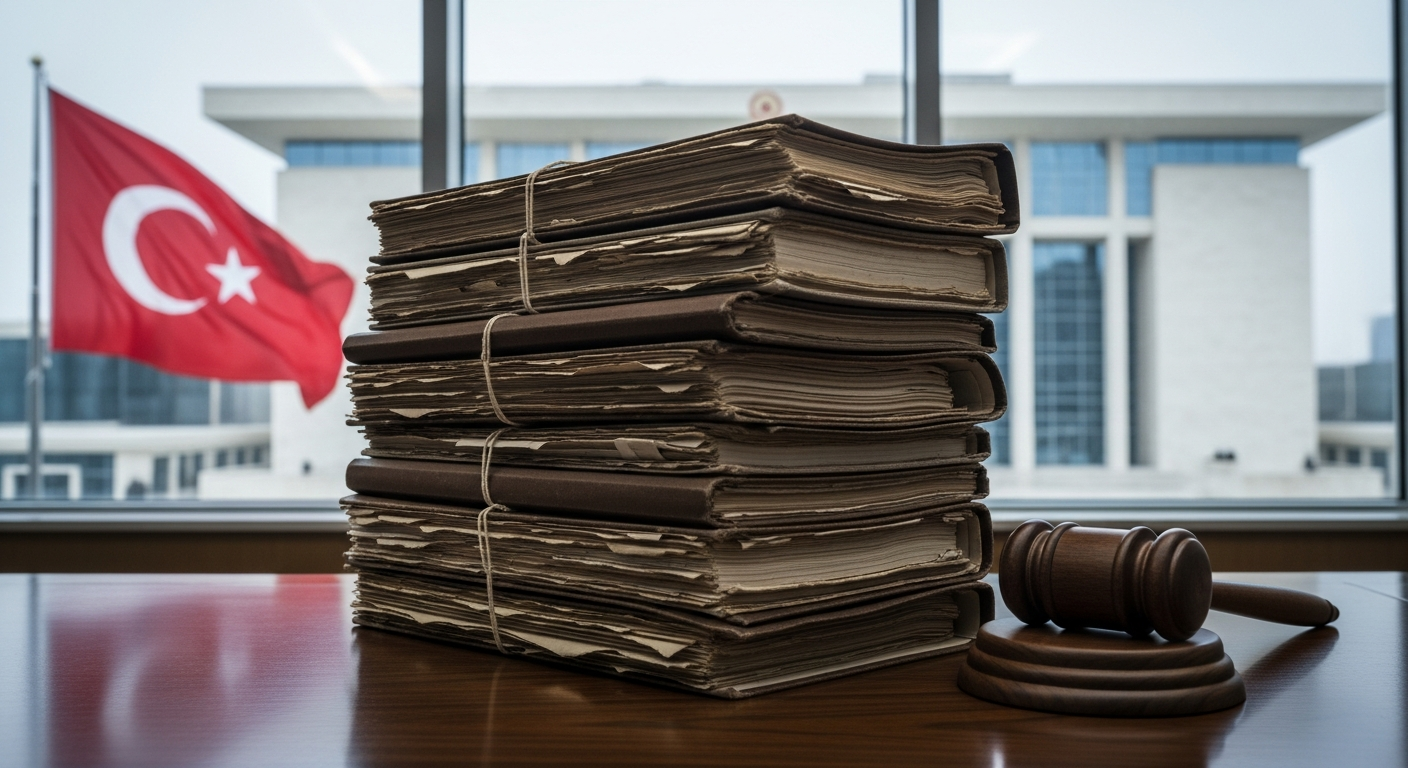
In a functioning justice system, an investigation is a question to be answered: did this person break the law, yes or no? In Türkiye, for thousands of people, the investigation is not a question at all. It is the sentence. You can lose years of your life, your job, your passport, and your name to a case that never produces a conviction, and was perhaps never meant to.
This article explains how investigations and trials drag on for years in Türkiye, how that delay itself becomes the punishment, what it costs the people caught inside it, and what international courts have already said about it.
How Long Do Investigations and Trials Last in Türkiye?
The first thing to understand is time. Cases do not move quickly, and the slowness is not an accident of an overloaded system. It is a tool.
Human Rights Watch’s 2019 report Lawyers on Trial documented lawyers held in pre-trial detention for many months before any verdict. In one Ankara case, 52 lawyers were charged and most were held up to 16 months before being conditionally released. In another, detained lawyers waited up to a year just for their first hearing. (Human Rights Watch)
The delays reach the highest level. In the case of civil society figure Osman Kavala, the European Court of Human Rights noted that Türkiye’s own Constitutional Court took one year, four months and 24 days to review his detention complaint, far outside the “speediness” the European Convention requires. (ECtHR / HUDOC)
When Does the Process Become the Punishment?
The clearest sign that a case is being used as a weapon is what happens when the accused actually wins.
In February 2020, a court acquitted Osman Kavala in the Gezi Park case and ordered his release. That same evening, prosecutors moved to re-arrest him, and within a day he was detained again on a separate accusation. He had already spent more than two years behind bars. The acquittal changed nothing. (Human Rights Watch)
The same pattern reaches rights defenders. Dr. Şebnem Korur Fincancı, chair of the Human Rights Foundation of Türkiye, was acquitted in 2019 of “terrorist propaganda” charges tied to a press-solidarity campaign. The acquittal was then overturned and a retrial ordered. As she put it plainly, the move was “intended to punish us.” (bianet)
When an acquittal is simply the start of the next case, the verdict stops mattering. The jeopardy itself is the penalty.
What Does It Cost the People Caught in It?
The price is paid long before any judge rules, and it is paid in the ordinary materials of a life: a career, a passport, a reputation.
A lawyer named Hakan Evcin spent ten and a half months in pre-trial detention before he was acquitted. By then the damage was done. “Because I was in pretrial detention,” he told Human Rights Watch, “I have been dropped by most of my clients… Then they said sorry and acquitted me.” The apology did not bring the clients back. (Human Rights Watch)
The reach extends past the accused. Türkiye’s Interior Minister reported that 234,419 passports were revoked in connection with investigations, according to the US State Department’s human rights report, and the practice was extended even to spouses who faced no charges of their own, leaving thousands unable to leave the country or travel freely abroad. (US State Department) Assets were seized on a vast scale: official figures cited by Turkish Minute record 784 companies taken over, worth tens of billions of lira. (Turkish Minute)
These are not the consequences of a conviction. They arrive with the accusation and stay for as long as the case does, which can be years.
What Have International Courts Found?
Türkiye’s own courts and the European Court of Human Rights have repeatedly found that these prosecutions serve a purpose other than justice.
In December 2020, the European Court’s Grand Chamber ruled in the case of opposition politician Selahattin Demirtaş that his lengthy detention had “pursued the ulterior purpose of stifling pluralism and limiting freedom of political debate,” and ordered his release. (LSE Human Rights) When Türkiye refused to release Kavala despite a binding judgment, the Court took the rare step of opening infringement proceedings against the country in 2022. (Human Rights Watch)
These are not the conclusions of activists. They are the findings of Europe’s highest human rights court, about a member state.
Why Endless Investigations Still Matter
It is tempting to look at a list of eventual acquittals and conclude that the system, however slowly, worked. It did not. The years are gone. The clients did not return. The passport was dead for the time it mattered most. And the message reached far beyond the courtroom: that anyone can be put through the same machine, and that winning at the end does not spare you the cost of the middle.
Advocates of Silenced Turkey documents these cases because the harm done by an open-ended investigation is real even when no conviction ever comes, and because a process used as a punishment is still a punishment. Justice delayed, here, is not justice eventually delivered. It is the point.
Other Blog Posts
The Right to a Defense, Denied: İmamoğlu’s July 2026 Hearings
The right to defend oneself is one of the foundations on which a fair trial rests. Without it, a courtroom risks ceasing to be a place where...
Read More
İmamoğlu on Trial: Anatomy of a 407-Defendant Mega-Case
In March 2025, the elected Mayor of Istanbul and Türkiye's leading opposition figure was detained, then jailed. One year later, his case ope...
Read More
Silencing the Press Before the Summit: Journalists Detained Ahead of NATO
When a government wants to control what the world sees, it starts with the people whose job is to report it. In the days before NATO's leade...
Read More