Defending Justice as a Crime: Why Human Rights Lawyers Are Being Prosecuted in Türkiye
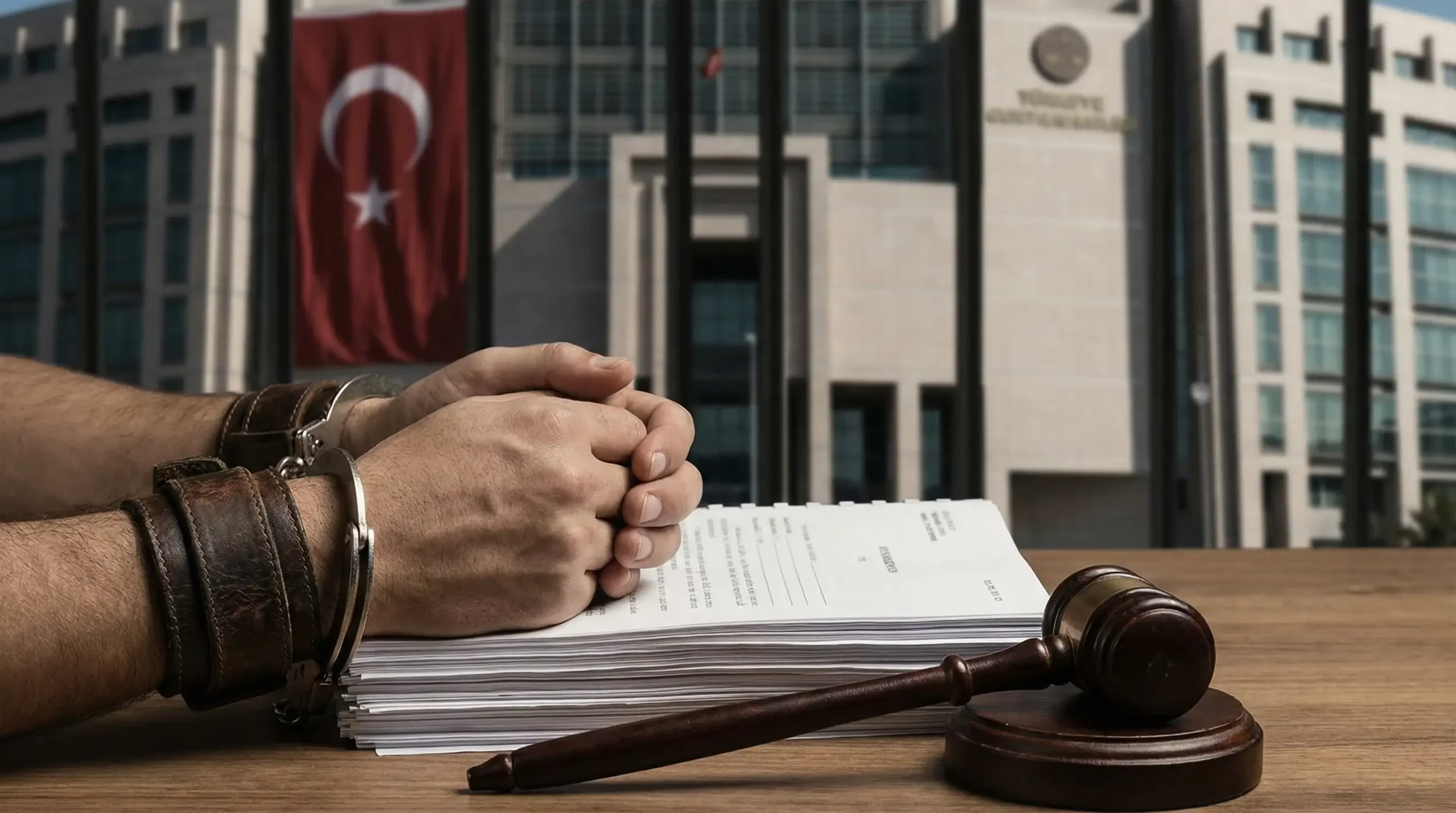
In any functioning legal system, lawyers are meant to stand between the individual and the power of the state.
In Türkiye today, that role has become dangerous.
In April 2026, United Nations experts issued a public warning: lawyers in Türkiye are increasingly being targeted, investigated, and prosecuted, not for committing crimes, but for defending clients accused of them.
This is not an isolated development. It is part of a broader pattern that has unfolded since 2016, where the boundaries between legal defense and criminal liability have become blurred.
This article explains why human rights lawyers in Turkey are being arrested, how anti-terror laws are being applied to legal professionals, and why this trend raises serious concerns under international law.
When Legal Defense Becomes Suspicion
For many lawyers in Türkiye, the risk begins with a simple decision: taking on a controversial case.
Defending individuals accused under terrorism-related charges, particularly those linked to post-2016 investigations, can trigger scrutiny from authorities.
Lawyers report being:
- placed under investigation for representing certain clients
- accused of “membership” in organizations based on case portfolios
- monitored due to communication with detained individuals
- prosecuted using the same anti-terror frameworks applied to their clients
In effect, legal representation itself is treated as a form of association.
This creates a chilling reality: the act of defending a client can be interpreted as aligning with them.
The Legal Framework: Broad Anti-Terror Laws
Türkiye’s anti-terror legislation has been widely criticized for its broad definitions and arbitrary application.
Terms such as “membership,” “propaganda,” or “affiliation” are often interpreted expansively, allowing prosecutors to build cases based on indirect or circumstantial indicators.
For lawyers, this becomes particularly dangerous.
Routine professional activities; meeting clients, reviewing evidence, preparing defenses; can be reframed as evidence of connection.
International legal standards are clear:
A lawyer must not be identified with their client or their client’s cause.
Yet in practice, this distinction is increasingly difficult to maintain.
What the United Nations Is Saying
The April 2026 statement from UN human rights experts did not emerge in a vacuum.
It reflects growing international concern that Türkiye’s legal system is placing lawyers themselves at risk.
The core issue is not simply arrest numbers. It is structural:
- lawyers are being investigated for their professional activities
- confidential lawyer-client relationships are being undermined
- fear of prosecution is discouraging legal representation
When lawyers begin to fear the consequences of taking cases, the right to defense itself is weakened.
Why This Matters for Everyone — Not Just Lawyers
At first glance, the prosecution of lawyers may appear to affect only a specific profession.
In reality, it affects the entire legal system.
If lawyers cannot defend clients freely:
- trials lose their balance
- defendants lose meaningful representation
- courts lose credibility
This is particularly critical in post-2016 Türkiye, where large numbers of individuals, especially KHK (emergency decree) victims and political detainees, depend on legal defense to challenge administrative and criminal measures.
When those lawyers are silenced, their clients are left without a voice.
Connection to Post-2016 Repression
The targeting of lawyers cannot be separated from the broader context of post-coup repression in Türkiye.
Since 2016:
- over 125,000 public servants have been dismissed through emergency decrees
- hundreds of thousands have faced investigation or detention
- thousands remain imprisoned under terrorism-related charges
These cases require legal representation.
But as documented by Advocates of Silenced Turkey (AST), the same system that prosecutes defendants has increasingly turned toward those defending them.
This creates a vicious cycle:
- individuals are accused
- lawyers defend them
- lawyers become suspects
The result is not only repression, it is also self-reinforcing legal pressure.
Patterns Observed in Lawyer Prosecutions
Based on documented cases and legal monitoring, several patterns emerge:
Lawyers are often investigated based on:
- the identity of their clients
- participation in certain trials
- communication records with detainees
- alleged “organizational links” inferred from casework
In many instances, there is no clear distinction between:
- professional duty
- criminal accusation
This lack of separation is at the heart of international concern.
International Legal Standards on Lawyers
Under international law, lawyers are entitled to specific protections.
The UN Basic Principles on the Role of Lawyers state that:
- lawyers must be able to perform their duties without intimidation, hindrance, or harassment
- they must not face prosecution for actions taken in accordance with professional responsibilities
- authorities must respect the independence of the legal profession
When lawyers are prosecuted for representing clients, these principles are directly challenged.
The Chilling Effect on the Legal Profession
Even in cases where lawyers are not arrested, the broader impact is visible.
Many legal professionals become more cautious:
- avoiding sensitive or controversial cases
- limiting communication with clients
- reducing involvement in politically sensitive trials
Over time, this leads to a quieter but equally serious outcome:
Fewer lawyers are willing to defend those who need defense the most.
This is how legal systems weaken, not only through arrests, but through fear.
Real Consequences for KHK Victims and Detainees
For individuals affected by KHK dismissals, criminal charges, or administrative bans, access to a lawyer is not optional.
It is essential.
Yet AST documentation shows that:
- some defendants struggle to find representation
- lawyers withdraw due to pressure
- legal processes become one-sided
Without effective defense, individuals face:
- longer detention
- reduced chances of acquittal
- limited ability to challenge administrative decisions
The impact extends far beyond the legal profession, it directly affects justice outcomes.
Why This Issue Is Gaining Global Attention
The prosecution of lawyers in Türkiye has become a focal point for international observers because it signals a deeper issue.
It suggests that the legal system is not only targeting individuals, but also weakening the mechanisms that ensure fairness for:
- human rights organizations
- legal scholars
- asylum decision-makers
This trend is increasingly viewed as a structural rule-of-law concern, not an isolated problem.
Why Silenced Turkey Documents This Pattern
Silenced Turkey does not approach this issue as a headline.
Through ongoing documentation, legal analysis, and case tracking, AST examines how:
- legal defense intersects with repression
- lawyers become part of the enforcement cycle
- patterns repeat across cases and years
This work positions Silenced Turkey as a legal reference point, providing context that goes beyond individual incidents.
Conclusion
A legal system is not defined only by its laws.
It is defined by whether those laws can be challenged.
When lawyers are free, justice has a chance.
When lawyers are prosecuted, that chance begins to disappear.
The question is no longer whether human rights lawyers in Turkey are being targeted.
It is what happens to justice when they are.
Silenced Turkey exists to document that shift, carefully, consistently, and with evidence.
Other Blog Posts

How Does the Rule of Law Erode? A Decade of Evidence From Turkey
Reading Systemic Human Rights Violations in Türkiye (2015–2025) No country becomes authoritarian overnight. No building collapses from a si...
Read More
The Right to a Defense, Denied: İmamoğlu’s July 2026 Hearings
The right to defend oneself is one of the foundations on which a fair trial rests. Without it, a courtroom risks ceasing to be a place where...
Read More
İmamoğlu on Trial: Anatomy of a 407-Defendant Mega-Case
In March 2025, the elected Mayor of Istanbul and Türkiye's leading opposition figure was detained, then jailed. One year later, his case ope...
Read More