Incompatible with Human Dignity
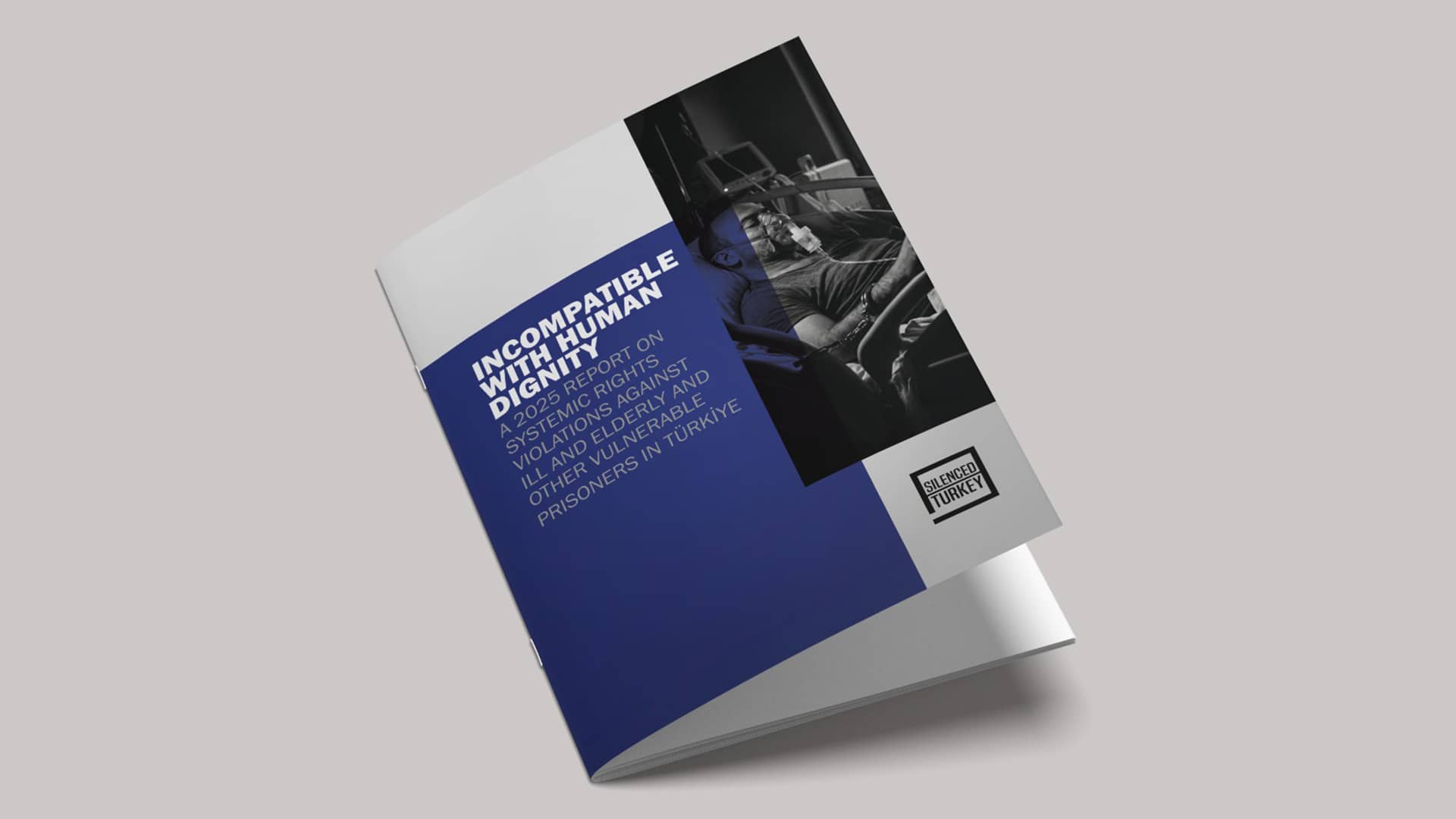
Incompatible with Human Dignity
This report documents systemic and grave human rights violations affecting ill, elderly, disabled, and other vulnerable persons deprived of liberty in Türkiye, including pregnant, postpartum, and breastfeeding inmates.
Based on qualitative evidence—including testimonies of former inmates, ward-mates, and relatives, and letters, memoirs, and documented accounts—the report demonstrates that violations begin at the custody stage and persist throughout incarceration and hospital referral pathways.
The findings establish a structural breach of the right to life, right to health, and the absolute prohibition of torture and ill-treatment, indicating not exceptional failures but entrenched institutional practice.
Context and Scope
Türkiye’s prison system operates under conditions increasingly incompatible with human dignity, shaped by the post-2016 institutionalization of OHAL-era governance and a climate in which discriminatory practices and administrative arbitrariness have become normalized. The report cites prison health not as a technical capacity shortfall, but as a rights crisis driven by chronic overcrowding, punitive administrative culture, negligence, and institutional fear.
Key Indicators of a Structural Crisis
Available civil society data cited in the report underscores the scale of vulnerability and institutional strain. In 2025, there are at least 1,412 ill prisoners, 5,864 prisoners over 65, and 269 prisoners with disabilities.
Capacity has not kept pace with population growth. As of December 31, 2024, prison capacity is reported at 301,397, while the convicted+detained population is 383,663.
Conditions have further deteriorated in 2025; as of April 2025, approximately 103,000 inmates reportedly lacked designated bedding, forcing individuals to sleep in ward corridors or communal kitchen areas—a concrete indicator of degrading and unsafe conditions.
Principal Findings
Across facilities and stages of deprivation of liberty, testimonies reflect recurring patterns: illtreatment during detention; overcrowded and unhygienic wards; inadequate ventilation; critical delays in medical care; arbitrary cancellation of hospital referrals; and structural failures in medical assessment and legal remedies. Access to specialists may take months, and diagnoses are frequently made only after illnesses advance—turning preventable or treatable conditions into irreversible harm.
A central bottleneck concerns medical assessment and release mechanisms. The report identifies the Forensic Medicine Institute (ATK) as a decisive barrier in practice: ATK reports are described as arriving too late, sometimes when individuals are near death, while prosecutors may issue arbitrary rejections and procedures can last up to a year. This combination renders the stay of execution (infaz erteleme) mechanism effectively dysfunctional and leaves bedridden, elderly, severely disabled, and terminally ill inmates incarcerated under conditions that can amount to inhuman or degrading treatment.
The report also documents a collapse of special protection obligations. Women—including those who are pregnant, postpartum, or breastfeeding—alongside elderly and disabled inmates, face a systemic absence of safeguards required by domestic and international standards. Psychological support mechanisms are described as severely inadequate, and practices that undermine medical confidentiality—particularly in mental healthcare—further erode the right to health. In extreme cases, basic care is shifted onto cellmates, effectively substituting inmate solidarity for the State’s duty of care.
Priority Policy Measures
To restore compliance with human dignity and international standards, the report calls for urgent, enforceable reforms, including: re-evaluating detention for vulnerable groups; insulating stay of execution from political and administrative interference; ensuring independent, civilianized prison healthcare; preventing arbitrary obstruction through transparent referral pathways; strengthening emergency intervention standards and accountability; safeguarding medical confidentiality (especially for psychological and psychiatric services); ending discriminatory access barriers; and guaranteeing full access for independent domestic and international monitoring bodies.
Conclusion
The report concludes that the violations documented are not isolated incidents; they constitute a chronic, institutionalized crisis within Türkiye’s penal system. Protecting the right to life and health of vulnerable inmates—and aligning detention conditions with human dignity—is framed as a mandatory, non-deferrable obligation under national and international law, and as a foundational step toward broader justice system reform.
Systematic Torture and Impunity in Türkiye: 2016–2025
A comprehensive AST report documenting torture, ill-treatment, medical neglect, and impunity in Türkiye from 2016 to 202...
Read More
Systemic Human Rights Violations in Türkiye: An Infographic Analysis (2015–2025)
This infographic booklet presents a comprehensive overview of systemic human rights violations in Türkiye between 2015 a...
Read More
Academic Voices Silenced in Turkey
6,081 academics dismissed in Turkiye—freedom is the first casualty when universities become battlegrounds for power....
Read More