Exhibition of Silent Screams Opens in Australia with Powerful Showings in Melbourne and Sydney
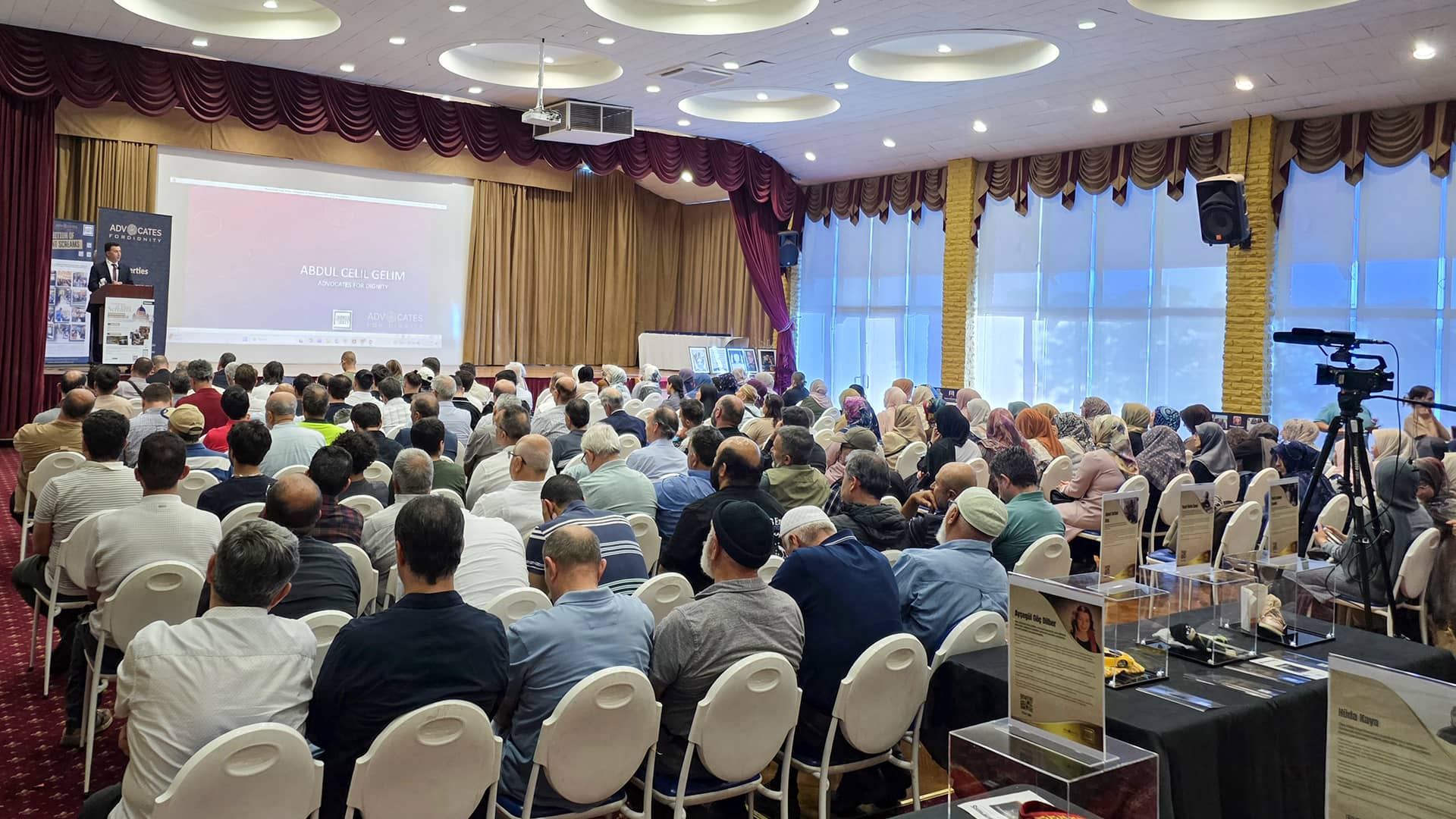
Melbourne hosted a significant community and human rights gathering this week with the opening of the Exhibition of Silent Screams, an immersive memorial exhibition presented by Advocates for Dignity (AFD) in collaboration with Advocates for Silenced Turkey (AST). The event, supported by the Selimiye Foundation and Sirius College, brought together members of the judiciary, academia, legal and human rights sectors, refugee organizations, and interfaith and community leaders—uniting diverse voices around the shared values of dignity, justice, and social harmony.
The evening commenced with a welcome delivered by Miss Sevval Ergun, who introduced the Master of Ceremonies, Mr. George Donikian, a respected media professional and long-standing figure in Australian broadcasting. Mr. Donikian’s career spans more than four decades, including his role as the first news anchor on SBS and his work across the SBS, Nine, and Ten networks. He currently leads Donikian Media, providing production services and professional training and mentoring for radio and television talent.
Opening his remarks, Mr. Donikian offered an Acknowledgement of Country, paying respect to the Traditional Owners of the land and their Elders past and present. He then welcomed the distinguished guests, noting the presence of representatives from the judiciary, academia, human rights and refugee advocacy sectors, and faith and community leadership. He also invited attendees to share reflections and photographs from the evening using the hashtag #AFDSILENCEDTURKEY, reinforcing the event’s aim to extend awareness beyond the room.
An Exhibition Grounded in Memory, Conscience, and Human Dignity
Mr. Donikian introduced the exhibition as a platform for preserving lived experiences through “personal memory objects”—items belonging to individuals who have endured political persecution, imprisonment, forced exile, and civil death. The exhibition, he noted, has been presented at dozens of events across North America and continues to grow as a living archive of memory and justice.
The exhibition includes hundreds of objects and testimonies, presenting stories from a wide range of affected communities, including journalists, educators, women, children, activists, and other marginalized groups. Throughout the evening, speakers emphasized that the exhibition is not driven by religion, ethnicity, or ideology, but by a universal commitment to human rights and remembrance. As articulated in the program, the purpose of the Exhibition of Silent Screams is to bring people of different backgrounds together, creating connection through a common denominator: shared humanity.
Welcome Address from Advocates for Dignity
The program then welcomed Mr. Abdul Celil Gelim, Executive Director of Advocates for Dignity, who formally greeted attendees and spoke about the organization’s mission and the significance of the exhibition. Mr. Gelim, an educator and community leader with extensive intercultural leadership experience in Australia and internationally, addressed the audience with a message centered on unity and justice.
In his speech, Mr. Gelim acknowledged the Traditional Owners of the land and thanked supporters who contributed to the event, highlighting that the gathering was intended to be more than a social evening; it was a reaffirmation of dignity, solidarity, and moral responsibility.
He outlined AFD’s vision of promoting democratic principles, the rule of law, and the protection of human rights in Australia and globally. He emphasized that human rights are universal, belonging to all people regardless of race, gender, religion, or background, and called on those present—advocates, educators, leaders, and community members—to remain engaged and proactive in responding to injustice.
Mr. Gelim also addressed the impact of authoritarianism and human rights concerns internationally. He presented figures and examples as part of his remarks, stressing that behind every statistic is a human life, a family, and a story. The exhibition, he stated, exists to ensure that those who have been silenced are not forgotten and to inspire action grounded in empathy and accountability.
Poetry and the Power of Voice
A spoken-word performance by Miss Aleyna Altinors, a law student at RMIT University, followed. Her poem reflected on migration, identity, language, and belonging, capturing the tension between building a new life and the grief of cultural loss. She also encouraged learning through respectful questioning, reinforcing the importance of curiosity, humility, and solidarity across communities.
Her performance resonated strongly with the audience, setting a reflective tone that continued throughout the evening.
Keynote: A Prison Story and a Call to Proactive Goodness
Mr. Donikian then invited keynote speaker Prof. Ismail Albayrak to the stage. Prof. Albayrak, a theologian and academic with extensive research in Qur’anic studies, interfaith dialogue, and classical Islamic literature, shared a personal account of imprisonment and spoke about justice as the foundation of society.
He reflected on how the loss of justice can lead to the erosion of humanity itself, affecting belonging, dignity, spirituality, and social cohesion. He described the broader impact of imprisonment beyond the individual, highlighting families, spouses, and particularly women and children who face long-term social, emotional, and economic consequences.
He urged attendees to move beyond awareness toward meaningful action, noting that injustice can become entrenched when good people remain passive. While acknowledging that such injustices occur in many parts of the world, he called on those living in freer societies to remain conscious of suffering elsewhere and to resist dehumanization through advocacy, public awareness, and community solidarity.
The keynote concluded with appreciation for the organizers and the exhibition team. Mr. Donikian then invited Mr. Gelim back to the stage to present a gift in recognition of Prof. Albayrak’s contribution.
International Perspective: Social Genocide, Censorship, and Resilience
The evening continued with a presentation by Ms. Aslihan Kas, a human rights advocate, educator, filmmaker, and Director of the Exhibition of Silent Screams. Based in New Jersey, Ms. Kas has contributed to human rights reporting and has directed award-winning documentaries focused on lived experiences of oppression and displacement.
In her address, Ms. Kas discussed how state violence, censorship, and discrimination shape everyday life and disproportionately affect vulnerable groups. She noted the global trend of shrinking civic space and increasing pressure on democratic institutions, explaining that activism and independent voices are often criminalized in authoritarian contexts.
She shared stories featured in the exhibition, describing how personal items representing journalists, educators, women, and families help make “invisible pain visible,” moving audiences beyond statistics to human stories. She also spoke about documentary storytelling and her film work, including narratives of women impacted by detention, mistreatment, and systemic discrimination.
She concluded by emphasizing that these challenges are global and that every act of listening, witnessing, and advocacy contributes to justice.
Reflections: Solidarity and the Refusal to Be Silent
In the final segment of the program, invited guests offered brief reflections on the exhibition and the evening’s message of social harmony through collaboration.
Dr. Omer Atilla Ergi of Charles Sturt University spoke about the emotional impact of the exhibition and the importance of becoming a voice for those who cannot speak freely.
Dr. Leighann Spencer, a lecturer in Crime, Justice and Legal Studies at La Trobe University, reflected on the significance of tangible memory objects and shared the story of a handmade knitted toy created for a baby in prison, symbolizing resilience and humanity under harsh conditions.
Prof. Marko Pavlyshyn, Emeritus Professor of Ukrainian Studies at Monash University, emphasized solidarity among oppressed communities. He spoke about the duty to document injustice, preserve memory, and maintain public awareness so that silence does not spread. He also highlighted parallels across global contexts and reaffirmed the responsibility to advocate for human rights universally.
Vote of Thanks and Closing
The evening concluded with a Vote of Thanks delivered by Associate Prof. Salih Yucel, who addressed the themes of human dignity and the realities of torture, discrimination, and injustice in many parts of the world. He reminded the audience that the defense of dignity requires consistency and courage.
Following the formal program, gift presentations and volunteer acknowledgements were held to recognize contributors, speakers, and organizers who supported the exhibition. Representatives were invited to the stage for a commemorative group photo, reflecting the unity that characterized the evening.
In closing remarks, attendees were thanked for their presence and encouraged to continue supporting efforts that promote goodwill and protect fundamental freedoms. The evening ended with a shared hope for peace, safety, and a renewed commitment to justice—so that the “silent screams” are heard.