Freedom Convention Turkey 2026 | Human Rights & Justice
Official Program & Schedule
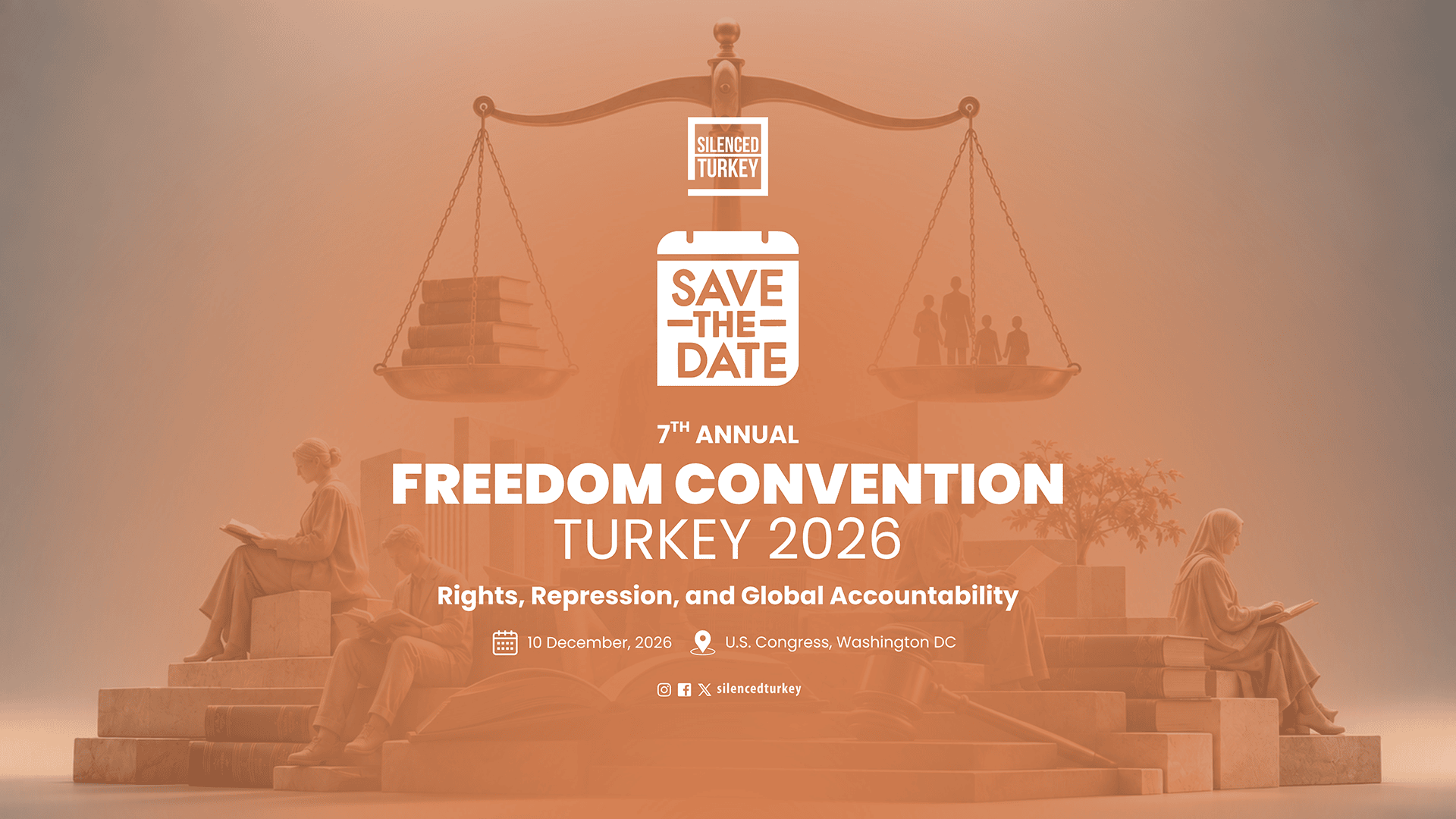
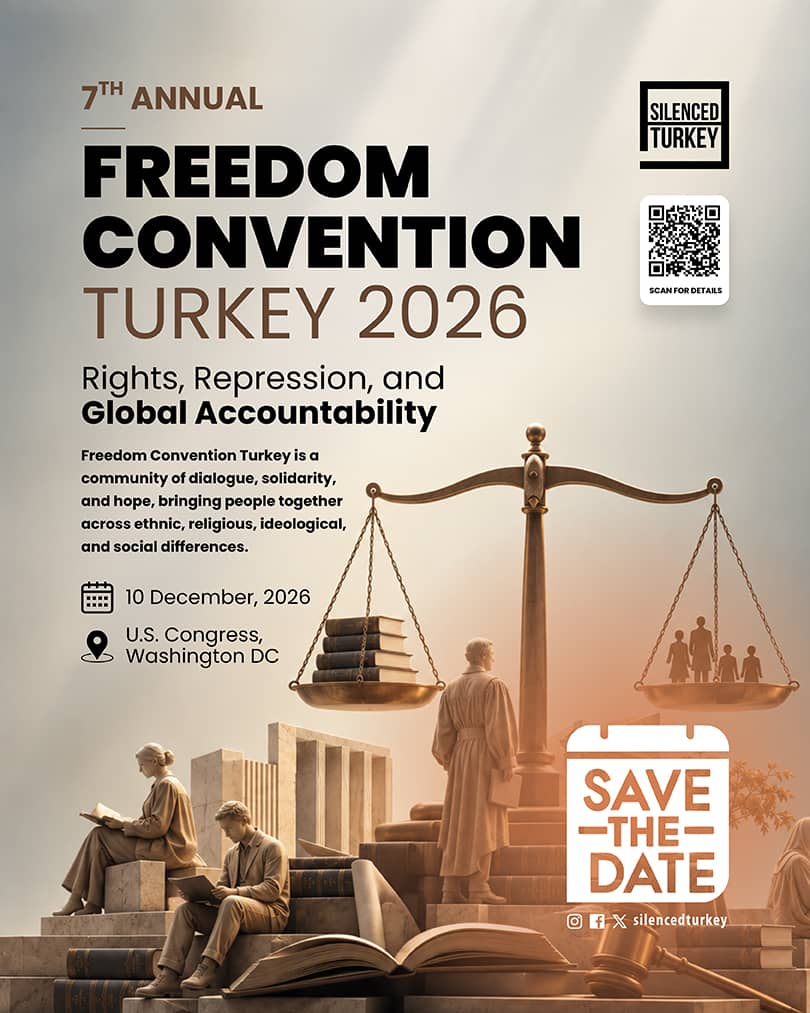
Data: December 10, 2026
Location: U.S. Capitol Visitor Center, Washington, D.C.
9:30 – 10:00 AM: Check-In / Coffee
10:00 AM – 11:30 AM: Panel I – From Ballots to Repression: KHKs and Authoritarian Governance in Turkey
11:30 AM – 12:00 PM: Check-In / Coffee & Light Snacks
12:00 – 1:30 PM: Panel II – Weaponizing Law, Evading Justice: Turkey in the Global System
Convention Overview
As Turkey undergoes a profound political transformation marked by democratic backsliding, institutional erosion, and the consolidation of executive power, the Freedom Convention Turkey 2026 convenes a diverse coalition of scholars, advocates, policymakers, and affected communities to critically engage with this evolving landscape.
Held under the theme “Turkey at the Crossroads: Rights, Repression, and Global Accountability,” this year’s convention explores the growing tension between formal democratic processes and the realities of authoritarian governance. While elections persist, increasing restrictions on freedoms of expression and association, media censorship, and unequal political conditions point toward an entrenched system of electoral authoritarianism.
Over the past decade, widespread human rights concerns, including arbitrary detention, torture, transnational repression, and severe limitations on press freedom, have reshaped the social and political fabric of the country. Emergency decree laws (KHKs), enacted in the aftermath of the 2016 coup attempt, have led to mass dismissals, systemic exclusion, and what many describe as a form of “civil death.”
Marginalized communities, including Kurds, Alevis, Armenians, women, journalists, and political dissidents, continue to face intensified discrimination and repression. At the same time, resistance persists across civil society, diaspora networks, and transnational advocacy spaces.
Organized as a platform for dialogue, documentation, and action, the convention builds on previous initiatives by centering lived experiences while fostering critical analysis of both domestic dynamics and international accountability mechanisms. Through two core panel sessions, participants will examine the structures of repression and explore pathways toward justice, dignity, and democratic renewal.
Panel I – From Ballots to Repression: KHKs and Authoritarian Governance in Turkey
This panel examines how authoritarian governance in Turkey is produced and sustained through the interaction of legal, political, and social mechanisms. It explores the gradual normalization of repression within institutional frameworks, highlighting the transformation of law from a tool of protection into an instrument of control.
Discussions will focus on democratic backsliding, the rise of electoral authoritarianism, and the long-term consequences of emergency decrees (KHKs), particularly their role in institutionalizing exclusion and “civil death.” Panelists will address practices such as arbitrary detention, torture, and the expansion of carceral governance, alongside restrictions on labor rights, environmental activism, and freedom of expression— especially within digital spaces.
The session also centers the lived experiences of marginalized communities, including Kurdish, Alevi, Armenian, and other groups, as well as the gendered dimensions of repression, such as gender-based violence and intersectional inequalities.
At the same time, the panel highlights forms of resistance and agency, examining how individuals and communities navigate, contest, and endure authoritarian conditions.
At its core, this discussion asks: How has authoritarianism become embedded within legal and political systems, and how can it be challenged from within society?
Panel II – Weaponizing Law, Evading Justice: Turkey in the Global System
This panel situates Turkey within the broader international human rights framework, exploring its relationship with global norms, institutions, and accountability mechanisms. It critically assesses both engagement and resistance, examining how international legitimacy is maintained despite persistent violations.
Panelists will address issues such as non-compliance with European Court of Human Rights (ECHR) rulings, the erosion of judicial independence, and the strategic use of legal frameworks to suppress dissent. The discussion will also examine serious allegations including war crimes, crimes against humanity, and conflictrelated abuses, alongside restrictions on mobility linked to KHKs and “civil death.”
The session further explores Turkey’s interactions with United Nations mechanisms, including the Human Rights Council and Special Rapporteurs, as well as broader challenges related to civil society repression and transnational repression practices. Key thematic areas include refugee rights, religious freedom, antisemitism, child rights, and gender-based violence within international legal frameworks such as CEDAW. Media repression and its implications for global press freedom will also be addressed.
In highlighting both the limitations and possibilities of international accountability, the panel underscores the role of transnational advocacy, solidarity networks, and policy engagement in advancing human rights protections.
At the heart of this conversation lies a critical question: What barriers hinder international accountability, and how can global mechanisms more effectively respond to authoritarian practices?
The Freedom Convention Turkey 2026 aims to contribute to:
- A deeper understanding of authoritarian dynamics in Turkey
- Stronger networks among scholars, advocates, and policymakers
- Increased visibility of human rights violations and marginalized voices
- Policy-relevant insights for international institutions and actors
- Concrete recommendations for advocacy, accountability, and reform
The Freedom Convention Turkey 2026 provides a critical platform for examining the intersection of domestic repression and international accountability. By bringing together structural analysis and lived experiences, the convention seeks not only to document and analyze current challenges, but also to foster collective strategies for justice, dignity, and democratic renewal.
Dr. Hafza Girdap
Spokesperson & Program Director
Advocates of Silenced Turkey (AST)